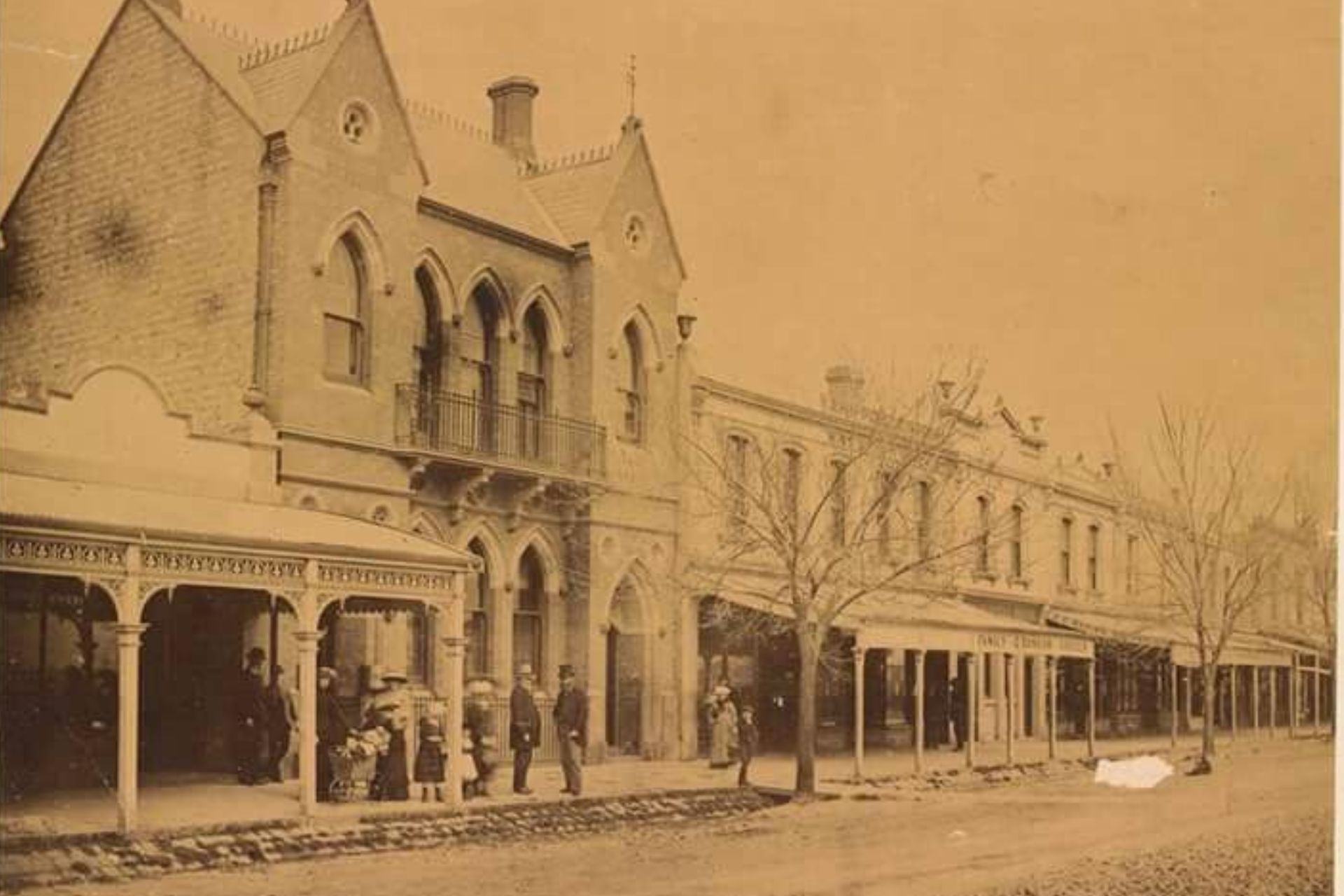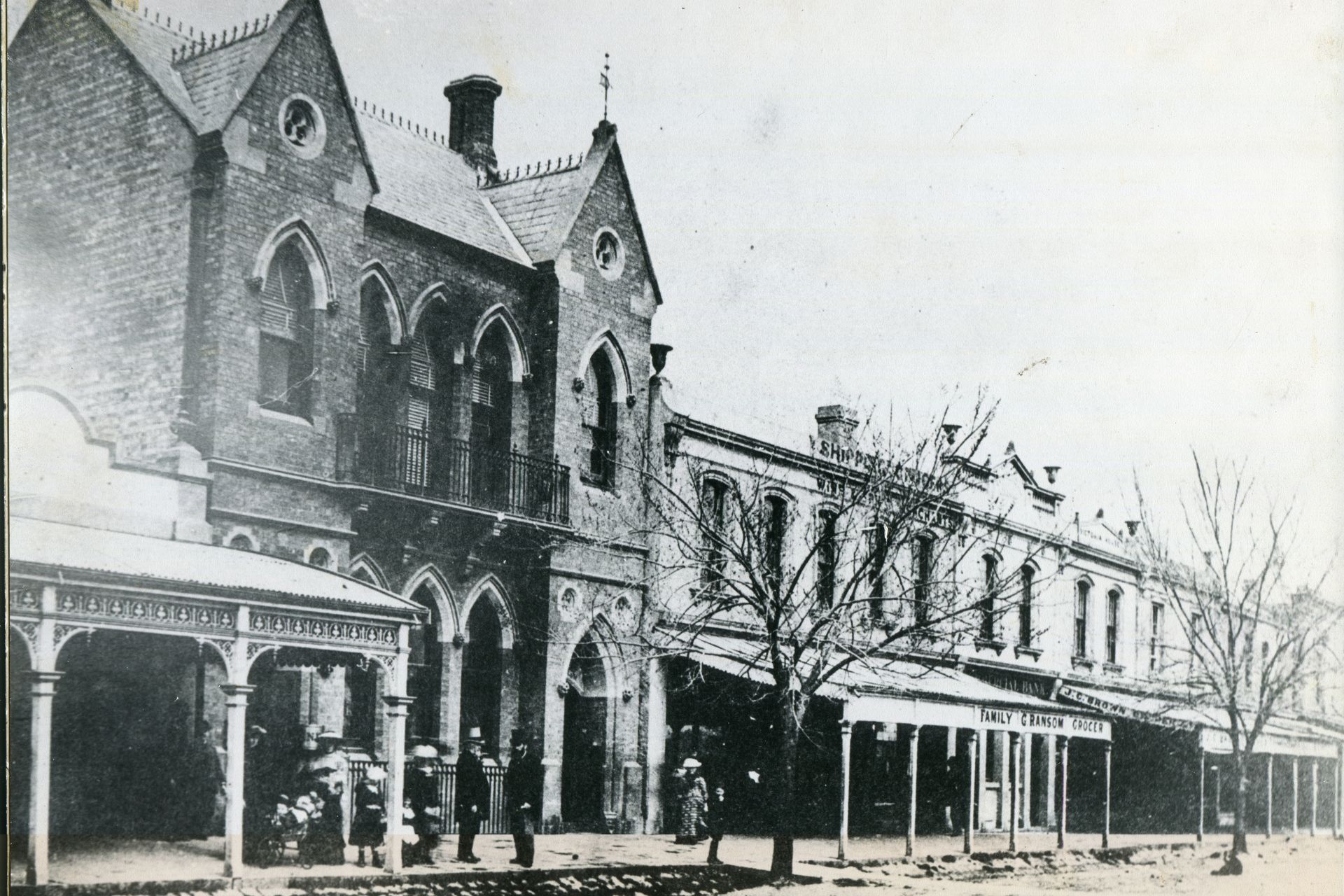
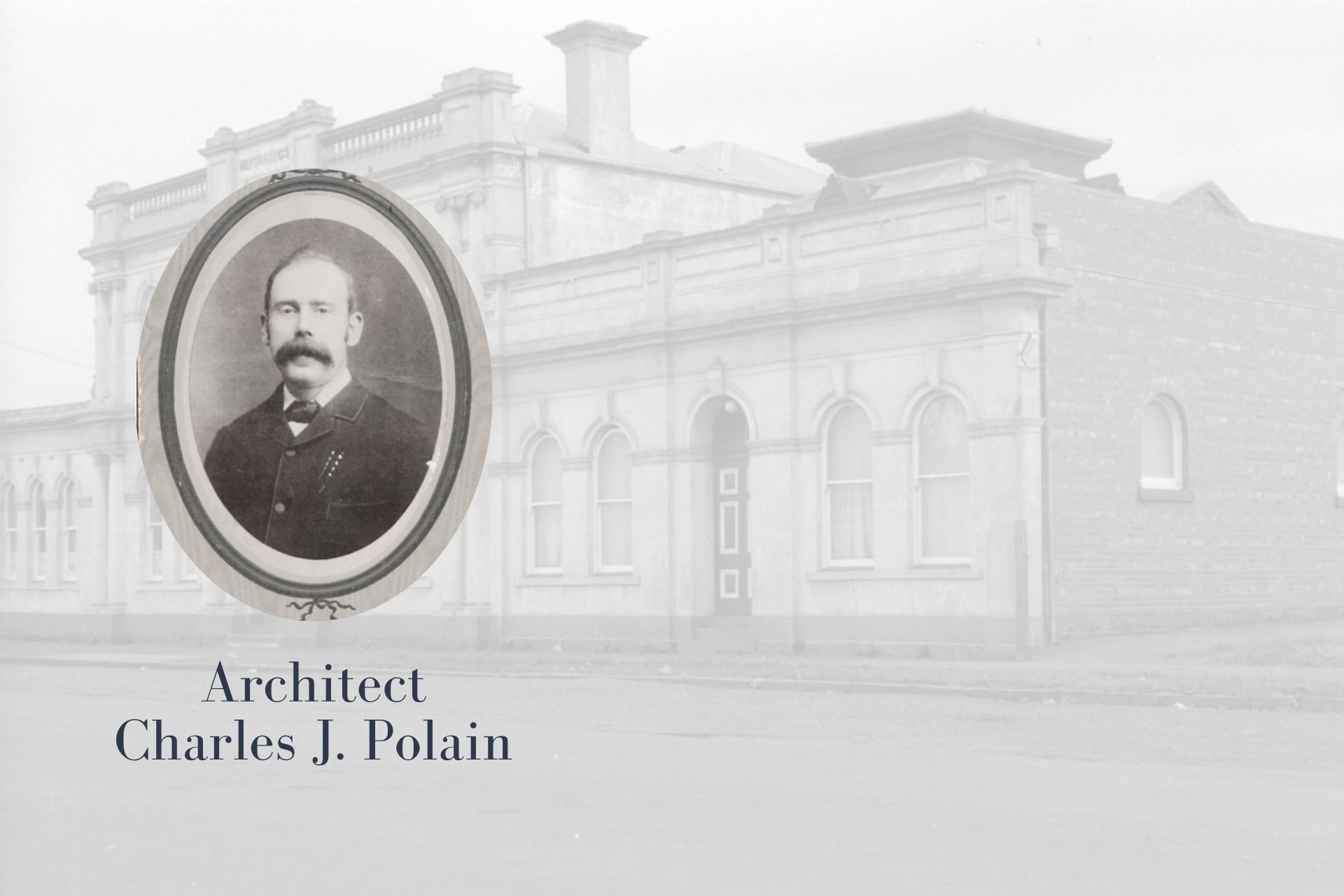
Charles James Polain - Blueprints and Starting Gates
Nicole Harris • April 16, 2026

Architect: Charles James Polain (1856-1899)

Early Life

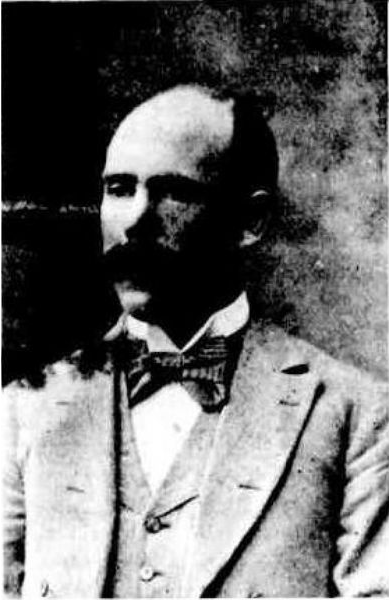
Charles James Polain, commonly known as C.J. Polain, was born on July 14, 1857, in Bethnal Green, Middlesex, England, to George Thomas Polain (1834-1924) and Emma (née King) (1836-1922). At the age of 19, seeking adventure and fortune in the colonies like many of his contemporaries, he departed from Plymouth in mid-1875 aboard the Trevelyan, arriving in Adelaide, where he listed his occupation as a cabinetmaker.


It is reasonable to assume he pursued studies in architecture upon his arrival, as by 1880, he was residing in Napperby, located in mid-north South Australia, and was recognized as an architect for several structures in the area. Polain is mentioned in newspapers soliciting tenders for a stone store in Port Pirie, South Australia, in April 1880. An advertisement in a local publication in December 1881 details his services under the name Polain, James & Co., Architects and Engineers, located at E. Gold’s, Stirling Road, Port Augusta, with additional branch offices in Jamestown and Semaphore Road, Glenelg. He was subsequently credited with the design of the new Roman Catholic Church in Port Pirie—St. Mark's Cathedral—which was completed in early 1882.


It is presumed he moved to Melbourne shortly after finishing the church in 1882, as he was next recorded marrying Mary Annie Clarke (1863-1943) on December 21, 1882, in East Melbourne, Victoria. Charles and Mary quickly expanded their family, welcoming six sons in the ensuing years.


Thus commenced his architectural journey in Victoria. His name began to appear in tender notices and local publications. By 1886, he had set up his own office in Footscray and, for a period during the 1880s, also operated an office in Williamstown. His career flourished amidst the economic and construction boom of the late 1880s, as suburban expansion heightened demand, especially in Melbourne's western suburbs, including Footscray, Williamstown, and Newport. His portfolio featured a wide array of structures, ranging from commercial buildings (shops and residences) to public and community facilities (churches, halls, institutes), as well as industrial sites and factories.


Notable Works

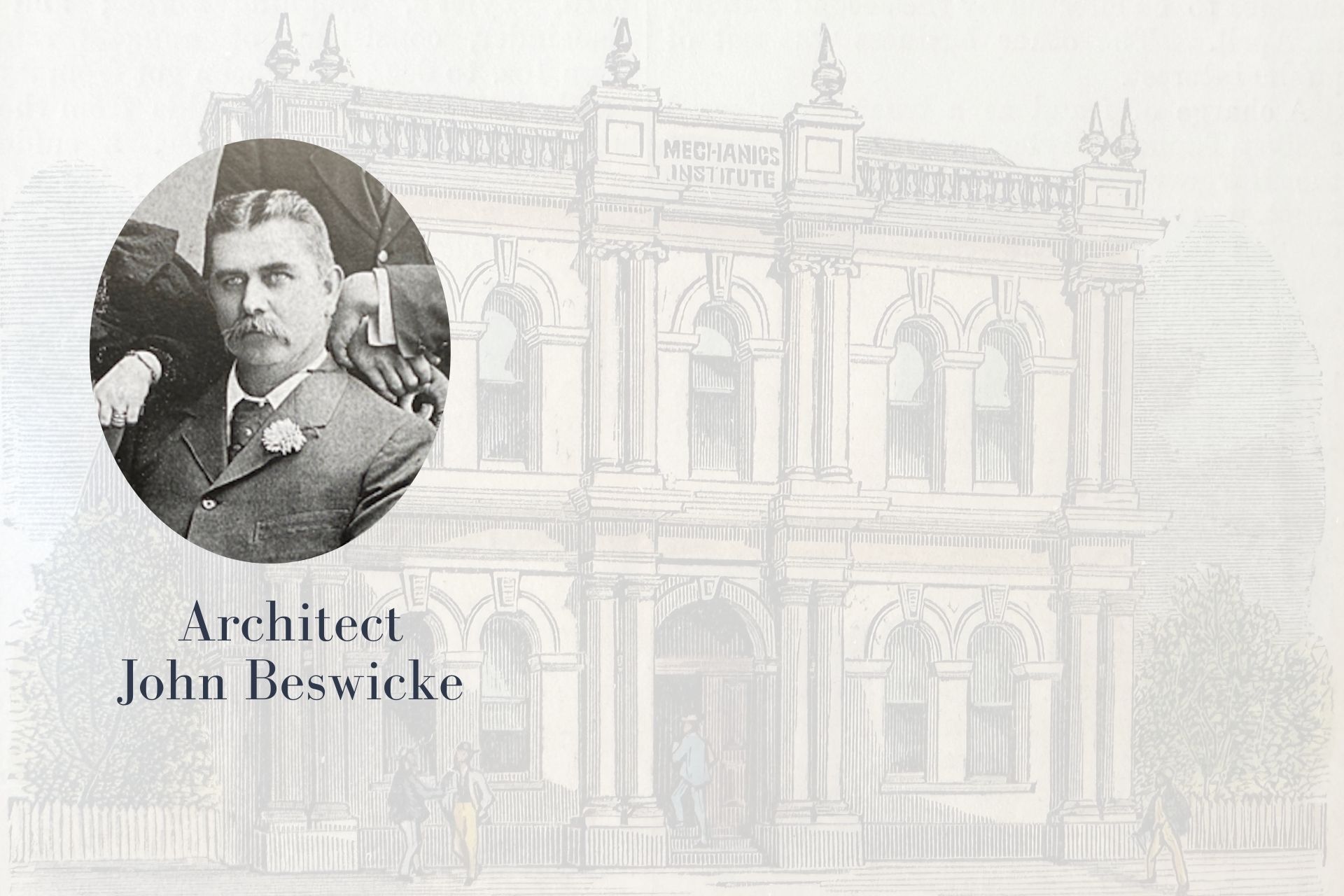
While not as widely known as contemporaries like Michael Egan and John Beswicke, C.J. Polain was responsible for many significant buildings throughout his career that helped shape Victorias built environment.

Williamstown Mechanics Institute – Stage 5, 1890 (Supper Room).

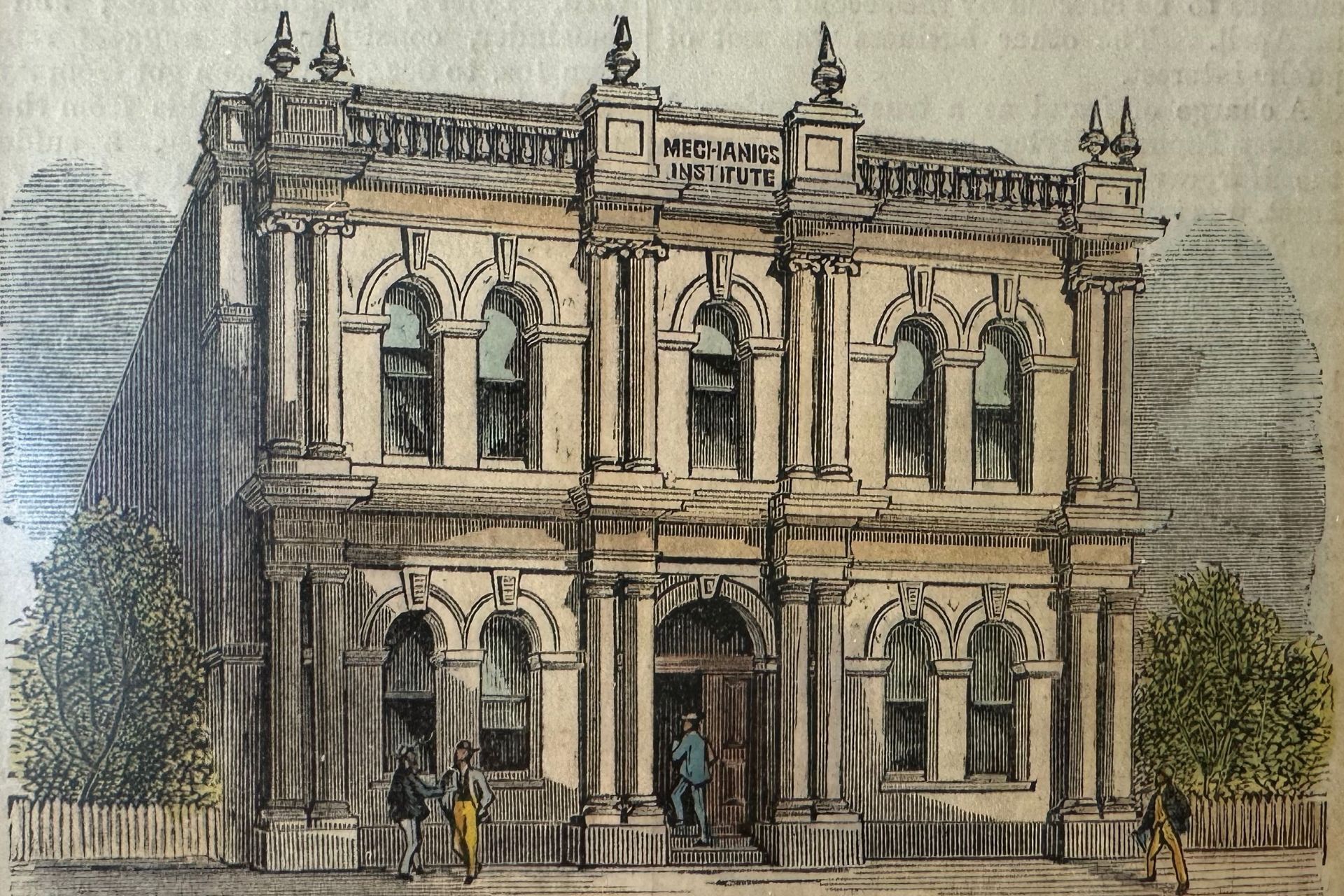
In 1888, the Williamstown Mechanics Institute committee called for tenders for additions to the building and let a contract for their construction to Mr Henry Hicks, under the direction of architect Mr C.J. Polain. A supper room, hall vestibule and caterers rooms were added to the right of the two storey façade. Erected at the northern end of the Institute, on the site of the original bowling green, the sympathetically designed addtion added a welcome additional space to the precinct. The new lecture or supper room measured 35ft by 34 ft and was illuminated with a large sunlight. A vestibule laid with black and white marble tiles welcomed visitors to the hall, while caterers room of 16ft by 20 ft and two clockroom provided additional patron amenities to the rear of the supper room. The extension was complete in January 1890.
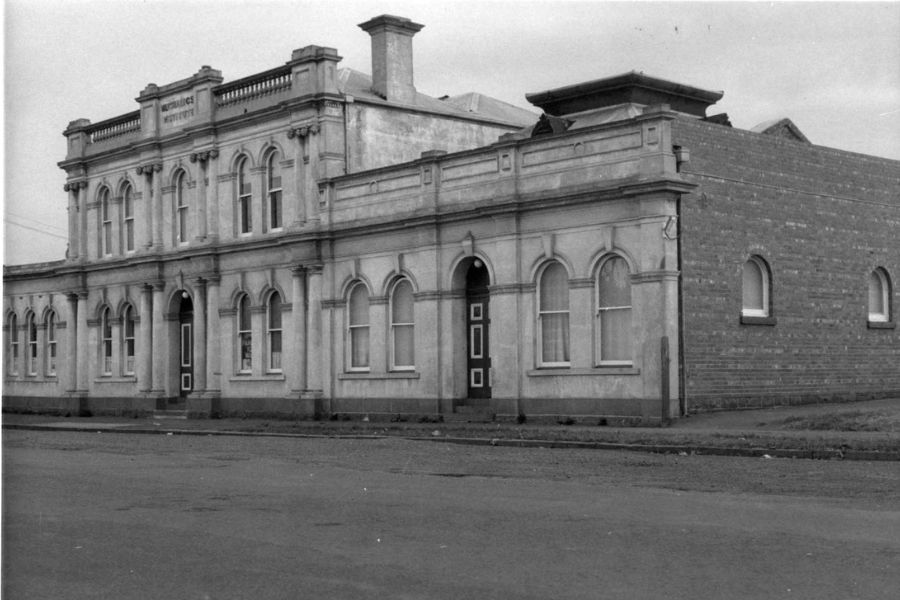
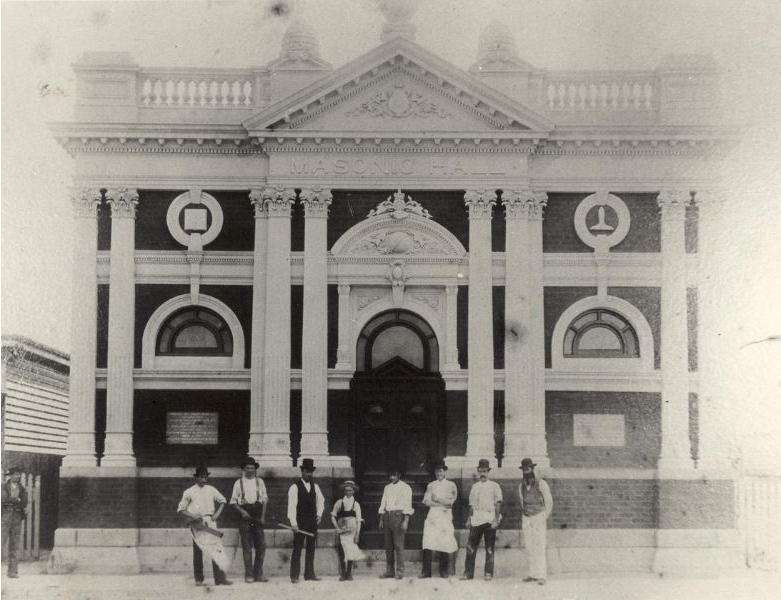
Polains award-winning design for the Excelsior Lodge of Industry, Masonic Temple in Williamstown, built in 1890/91 emerged as a vital social and meeting hub for fraternal organisations and continues to hold a significant place in Williamstown’s Masonic heritage.


A Victorian Italianate shop and residence at 15-17 Mason Street, Newport, built in 1890 stands out as one of the earliest commercial structures in Newport. Its impressive architecture, alongside the Newport Hotel and the Newport Commercial Bank, reflects the optimistic early development phase of the area during the speculative residential subdivision of the 1880s.

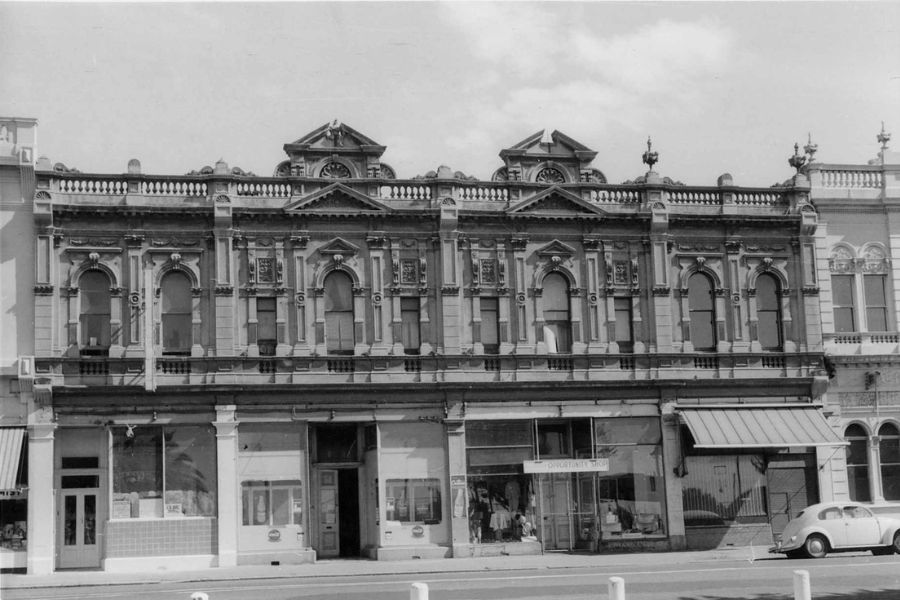
Referred to as the Salisbury Buildings, located at 195-203 Nelson Place, Williamstown, and constructed in 1889, Polain designed this two-storey row of shops and residences, adorned with stucco and parapets, boasting an elaborately decorated upper façade. It represents an almost intact series of shops, artfully employing ornamentation and composition within a cohesive commercial design.


The former Nugget Polish Company Building, located at 16-20 Kanowna Street (previously Morris Street) in Williamstown (circa 1887-88). The site was initially constructed as an industrial steam laundry and used by P & O. The Nugget Polish Company later acquired the property and erected this ornate structure to serve as their headquarters in Australia.
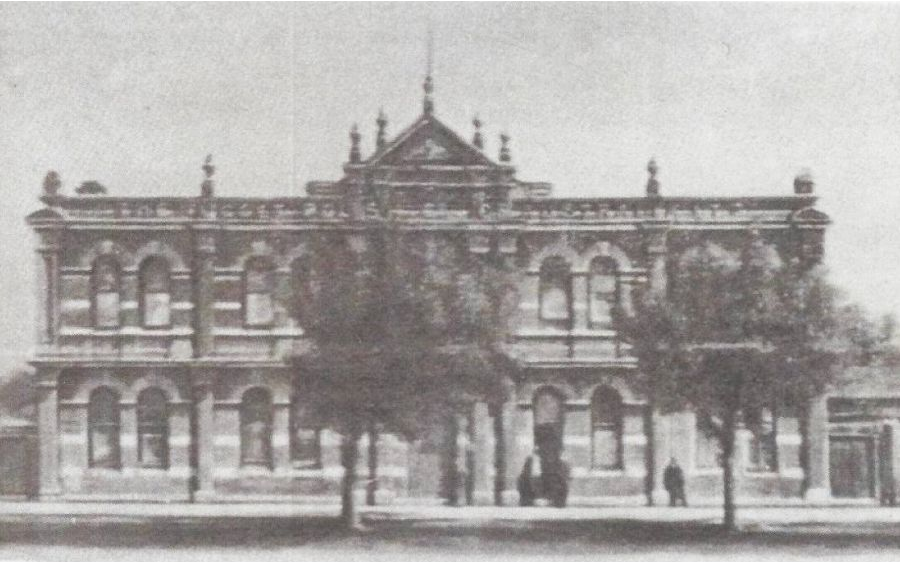
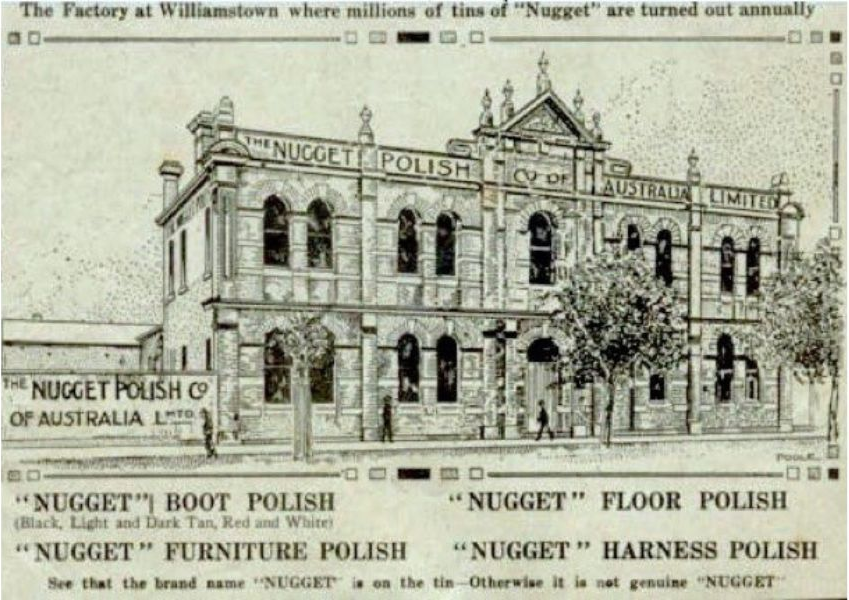
Punshon Building, 82-84 Ferguson Street, Williamstown (1890): The former Punshon's Federal Stores, designed for Robert Punshon and constructed by James Rowsthorn, is renowned for its elaborate ornamentation and unique bas relief bust of Punshon at the building's highest point. It is a landmark within the historic streetscape of Ferguson Street, illustrating the street’s growing commercial significance in the late nineteenth century and its association with the Punshon family.
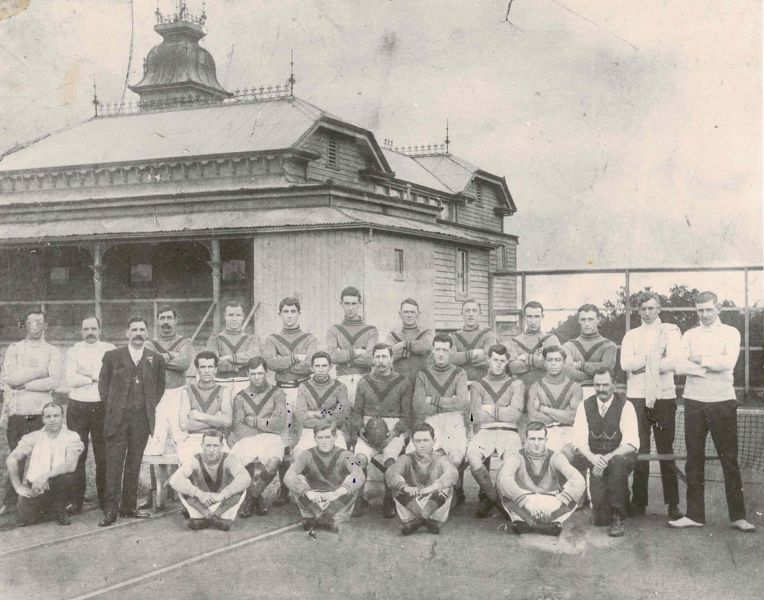
Williamstown Cricket Pavilion (circa 1890). The building was situated where the current tennis club pavilion is located. 
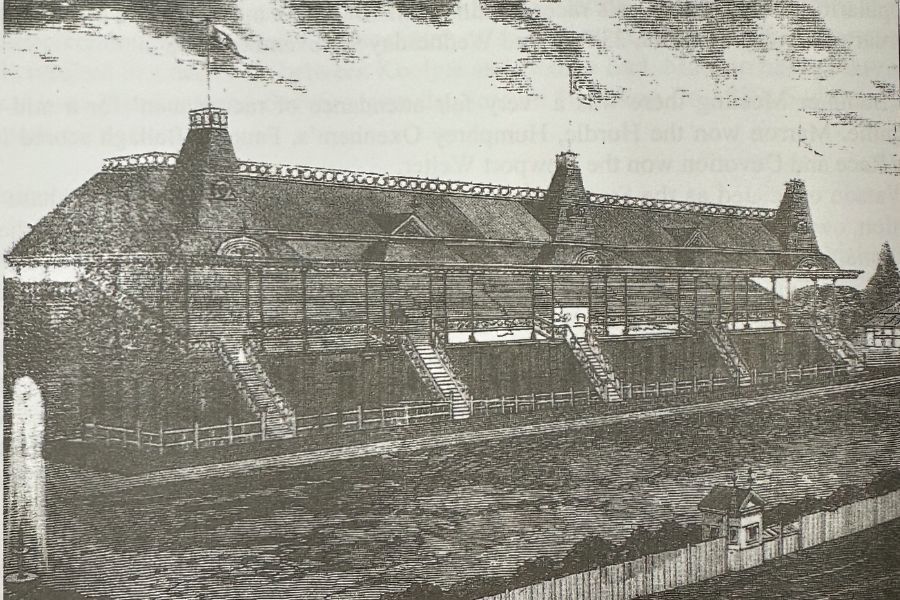
Williamstown Racing Club Grandstand. Polain’s prize winning design was selected from a field of 46 entrants in 1889 and erect for a cost of £10,000. Once completed the grandstand was described as a”magnificient structure and in appearance and convenience far before Flemington. The Grandstand was 250 feet long, 50 feet wide and 30 feet high, comfortably seating 2,000 spectators who approached their seats from five stairways. They were afforded a panoramic view of the racecourse, the bay, the beach, and the surrounding countryside”. 
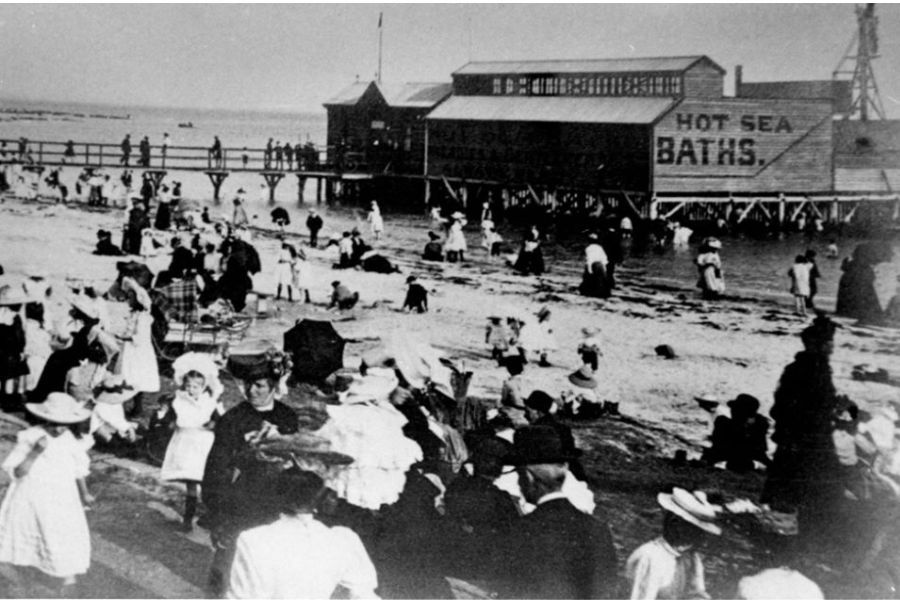
The original timber baths were later extended to included hot water baths and provided designated separate ladies and mens bathing facilities. The baths were destroyed in a storm in 1934.

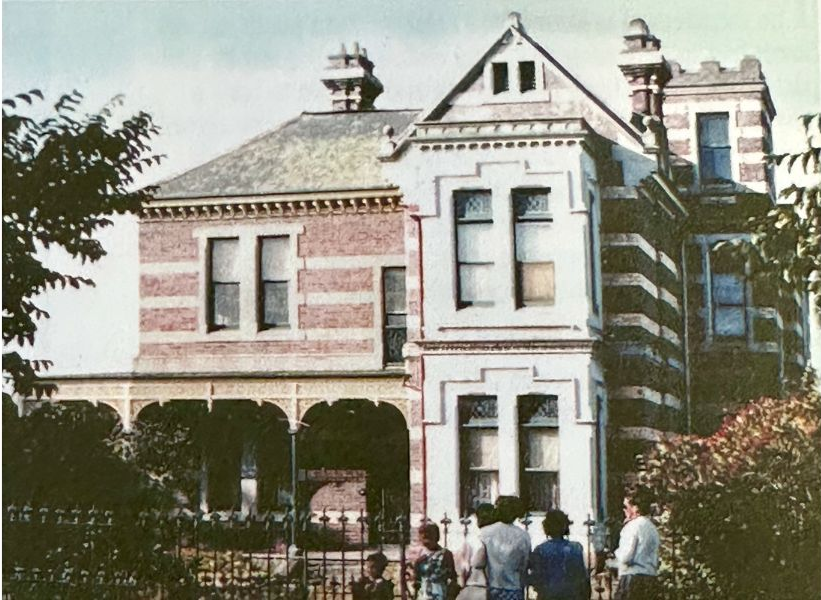
The Presbyterian Manse, located on Hanmer Street in Williamstown, stood behind St. Andrews Church on Cecil Street. This striking two-storey red brick building, complete with a tower, was designed by Polain and built in 1887, but unfortunately, it was demolished in 1964. Today, only the intricate wrought iron fence survives, and the site is now home to the Kids by the Bay Children’s Centre.
Architectural Style and Features

Polain’s architectural style often incorporated elements of the English Queen Anne manner, notably using red brick rather than the more typical stucco for Victorian-era commercial facades. His designs featured cement detailing, parapeted elevations divided by cemented and shaped brick pilasters, and careful attention to symmetry and composition. 


Polain as an Inventor

In the 1880’s Charles turned his attention to improving horse racing technology. Racing was hugely popular in colonial Victoria but racing starts were often chaotic, with horses lunging forward prematurely. In response, Polain devised a mechanical starting gate, designed to give all horses a fair and simultaneous start. Polain's invention—reported in newspapers and operable by either a rider or an assistant—highlighted his technical creativity and practical approach. His device was patented in Victoria and used by the Victorian Racing Club and Tasmanian Turf Club, making him one of the earliest to attempt such a system in Australia – decades before starting gates became standard worldwide. Although his version didn’t achieve mass adoption at the time, it attracted attention in racing circles and shows Polain’s blend of technical ingenuity and practical problem solving  - qualities also visible in his architectural work.

Later Career and Move to Western Australia

The economic depression of the mid 1890s adversely affected Polain’s career, leading to his bankruptcy in 1892. Despite this setback, he continued to participate in public life, nominating for the Footscray council in April 1893. Seeking new opportunities, Polain moved to Western Australia in 1895, during the gold rush sparked by Paddy Hannan’s discovery at Mt Charlotte. In Perth, Polain brought his patented inventions and racing club connections, calling tenders for new works such as the Administrative Building at the Perth Racecourse for the W.A. Turf Club Committee. He described himself as an Engineer, Architect, and Certificated Patent Agent and continued to organise significant projects in his new surroundings.

Death and Legacy

Charles James Polain died on 29 October 1899 in Fremantle, Western Australia, after a brief illness. Although his life was cut short at the age of 41, his legacy endures in the form of the many distinctive buildings he designed, which continue to define the streetscapes of Williamstown, Newport, and Footscray. Many of Polain’s buildings are now part of heritage precincts in Melbourne’s western suburbs and are valued for their nineteenth-century architectural character. While his name may have faded from mainstream architectural histories, his innovative spirit and distinctive works remain integral to the region’s built environment.


If you would like to read more about the Williamstown Mechanics' Institute, please click here.


References:

  • New Roman Catholic Church Port Pirie, South Australian Register, (Adelaide, SA: 1839 - 1900), Sat 18 Mar 1882, pg 1. NLA: http://nla.gov.au/nla.news-article47113202
  • New Presbyterian Manse, Williamstown Advertiser (Vic: 1875-1954), Sat 30 April 1887, pg 2. NLA: http://nla.gov.au/nla.news-article270749548
  • Tenders Williamstown Cricket Club Pavillion, Williamstown Adveriser (Vic: 1875 - 1954), Saturday 28 May 1887, pg 3. NLA: http://nla.gov.au/nla.news-article270751494
  • Tenders Williamstown Racing Club, Williamstown Adveriser (Vic: 1875 - 1954), Saturday 28 May 1887, pg 3. NLA: http://nla.gov.au/nla.news-article270751494
  • The Williamstown Baths, Williamstown Advertiser (Vic: 1875 - 1954), Sat 10 Dec 1887, pg 2. NLA: http://nla.gov.au/nla.news-article270696486
  • Tenders - Williamstown Mechanics Institute, Williamstown Advertiser (Vic: 1875 - 1954), Sat 21 Jul 1888, pg 3. NLA: http://nla.gov.au/nla.news-article270694957
  • Laying the Stone, Williamstown Chronicle (Vic: 1856 - 1954), Sat 02 Feb 1889, pg 2. NLA: http://nla.gov.au/nla.news-article68600599
  • Enlargement of the Mechanics Institute, Williamstown Advertiser (Vic: 1875 - 1954), Sat 25 Jan 1890, pg 3. NLA: http://nla.gov.au/nla.news-article270827351
  • To the Editor of the Advertiser, Williamstown Advertiser (Vic: 1875 - 1954), Sat 12 Jul 1890, pg 2. NLA: http://nla.gov.au/nla.news-article270828430
  • Racing Club Meeting, Williamstown Chronicle (Vic: 1856 - 1954), Sat 23 Aug 1890, pg 3. NLA: http://nla.gov.au/nla.news-article68594092
  • Williamstown a great metropolitan racing club, Tom Ferris
  • Freemasonry, laying the foundation stone of the new masonic hall, Williamstown Advertiser (Vic: 1875 - 1954), Sat 23 Aug 1890, pg 2. NLA: http://nla.gov.au/nla.news-article270830857
  • Mssrs Punshon & Co new buildings. Independent (Footscray, Vic 1883 - 1922), Sat 9 Jan 1892, pg 3. NLA: http://nla.gov.au/nla.news-article73762082
  • Western Australia, Independent (Footscray, Vic 1883 - 1922), Sat 14 Sep 1895, pg 3. NLA: http://nla.gov.au/nla.news-article73232257
  • W.A.T.C. Anniversary Meeting, Western Mail (Perth, W.A.: 1885 - 1954), Fri 4 Feb 1898, pg 30. NLA: http://nla.gov.au/nla.news-article33150037
  • Obituary, Western Mail (Perth, W.A. 1885 - 1954), Sat 04 Nov 1899, pg 17. NLA: http://nla.gov.au/nla.news-article33184750
  • Personal, W.A. Record (Perth, W.A.: 1888 - 1922), Sat 04 Nov 1899, pg 12. NLA: http://nla.gov.au/nla.news-article212394369

Our stories
By Freya Smart April 16, 2026
On July 10, 1860, the Williamstown Mechanics Institute was opened with an extensive soiree. With the institute’s opening, it was also decided to create a public library associated with the institute, in the hope that the institute could take advantage of the government grant for free libraries. [1] Later that year, in October, it was announced that 200 volumes had been added to the library in the last six months, bringing the total number of volumes to 940. Furthermore, upwards of 1000 books had been issued to users in the library’s first half-year of being opened. [2] Reports from later that decade continued to outline the extensive additions to the library, including “the writing of our most celebrated Philosophers, Statemen, and Travellers.” The committee sought not to only add to the library works of fiction, but also “those works which have a direct tendency to instruct and elevate the minds of readers.” In April 1867, it was reported that 1,932 books had been issued in the past six months, revealing the steady rise in popularity of the library. [3] By May 1869, £2500 had been spent on the Mechanics Institute building, and the library’s total number of books had reached 2,532. Ability to loan books from the Melbourne Library meant that members could choose from 4,000 books in total. It was also at this time that a “most comfortable and attractive” reading room was opened, which hosted a fireplace and “the most popular newspapers and magazines of the time.” [4] Later that year, in October, an auction was held to get rid of damaged books. The proceeds of the auction were to be for the purchase of new books, thus “maintain[ing] the high standard of excellence which [the] Library has attained,” and providing library members with “works of the great writers of the day”, including those in disciplines such as theology, science, arts, history, biography, travels, poetry, and fiction. With satisfaction, the committee also noted that attendance of the reading room had increased considerably. [5] In April 1870, the committee announced that they had continued to make valuable additions to the library, displaying “great discrimination in choosing only such as will tend the elevate the taste of the readers.” Books added included Henry Fawcett’s Manual of Political Economy, Napoleon’s Julius Caesar, Charles Dickens’ Our Mutual Friend, and Alfred Tennyson’s Holy Grail, among many others. [6] By April 1871, the library’s total number of books had now reached 2,467. The Reading Room continued to be well-attended, including by seamen who frequent the Williamstown piers, who were allowed free admission. [7] In July 1873, a report from the annual meeting of the Victorian Seamen’s Mission announced that 30,000 to 35,000 seamen visited Victoria each year, revealing the importance of the free reading room at Williamstown. [8] According to a report from October 1874, in the past six months the committee had added compilations of Dickens, Thackeray, and Scott. 109 volumes had also been rebound, thus leaving the library in a more satisfactory state regarding both the number of volumes and their condition.[9] In October 1877, it was noted that there had been an increase in attendance of the reading room by officers, apprentices, and seamen. Shipping firms had promised subscriptions to the funding of the institute for their seamen. The President of the institute believed that the free reading room would provide “comfort and improvement of the seamen in their employ, thereby checking the abominable vice of drunkenness that prevails among sailors when they are left to their own resources.”[10] In April 1879, the library increased its opening hours.[11] Later that year, the front room of the library was fitted for public convenience, and the public were allowed free access to the library.[12] In November 1879, the institute changed its name to “The Williamstown Mechanics’ Institute and Free Library,” which had been necessary to enable the library to receive government funding.[13] By April 1886, over 4,250 volumes were now in the library. Various clubs and societies had also begun to use rooms in the library, including the Amalgamated Society of Engineers, the Williamstown Shipwright’s Society, the Williamstown Horticultural Society, the Williamstown Eight Hours Society, and more. The library had also received a donation of twenty images from the Melbourne Public Library, which were to be framed and hung around the institute.[14] In April 1886, an editorial in the Williamstown Chronicle written by representatives of the institute criticised the lack of library subscribers, particularly among the youth, who appeared to be more interested in sports rather than mental cultivation. The writer lamented that they cannot see how a couple of hours spent at our Mechanics’ Institute – or other kindred establishment of a night – would at all lessen a young man’s prowess in the sports arena, and, when the more serious duties of life come to be entered on, the knowledge thus acquired would be of infinitely more service to him…[15] In April 1888, at the institute’s AGM, it was suggested that there should be more attention given to accommodation in the reading room, which would “induce youths to cultivate literary knowledge instead of congregating at corners and walking about the streets.” [16] The library was thus seen as of vital importance in educating Williamstown’ youth. I n October 1891, another letter to the editor of the Chronicle urged the social and individual importance of the library: Can you explain how it is that the bulk of Williamstown people fail to appreciate the local institute and free library to the extent it deserves? Maybe it is that they really do not fully understand the intellectual feasts that are daily offered for their acceptance… The existence of the institution wholly depends upon the support of the public, and surely every intelligent member of our community must feel that such an institution is beneficial and elevating in character, and an advantage to the town.[17] In January 1899, the library had nearly 5000 volumes and was considered “one of the best in the suburbs.”[18] In January 1903, the institute’s committee entered into an agreement with the town council to municipalise some parts of the institute, while keeping the library and reading room under the control of a joint committee of council members and representatives of the institute. The agreement was on the condition that the council erect a new hall for the institute capable of seating 300 people.[19] By May 1909, the library had continued to expand, housing 5456 books on its shelves, with a total of 234 chairs inside the institute.[20] . November 1925 saw renovations for the institute: the flooring of the stage was renewed, the public reading room was furnished with new periodicals, and framed photographs of Australasian scenic spots were hung on the walls.[21] By January 1927, the library was composed of more than 9,000 books, periodicals, and magazines.[22] A report from May 1928 announced that the library now catered for 500 families, which was a higher percentage of the population than any other suburban library. It was also noted that for the past years, the library had not received any government grants but had rather been supported entirely by member subscriptions, and “those desirous to read”.[23] In August that year, a junior section was added to the library.[24] In July 1929, there was a motion that the committee confer with the Williamstown City Council in order to obtain a grant for the purchase of educational literature. With a grant of £350 a year, the committee said they would provide educational literature, a free children’s library, and a free reading room that included papers and magazines. The agreement would be under the control of a joint committee of the council and representatives of the institute.[25] In September that year, the institute sent a letter to the council, stating that they were not prepared to accept the offer to take over the assets and liabilities of the institute upon terms which they felt meant the municipalisation of the institute. The committee renewed its application for a grant, and representatives argued that the institute had done a lot for the educational needs of the municipality, thus meriting council support. Ultimately, the establishment of a children’s library and free library would benefit all.[26] The next month, the Mayor moved that £100 be spent on the institute, and in November the council asked the institute to indicate how they would spend the money. The institute’s committee responded that they would establish a free children’s library with 800 books. Twenty-four women had also volunteered to help get the library going. It was hoped the children’s library would be finished for Christmas.[27]
By Nicole Harris April 16, 2026
Architect: Michael Egan (c.1846 - 1912)
By Nicole Harris April 16, 2026
Architect – John Beswicke (1847-1925)
By Nicole Harris April 16, 2026
Architect: John Flannagan (1838-1882)
By Nicole Harris April 16, 2026
1860 - Stage 1: Early beginnings
By Nicole Harris April 16, 2026
The History of Our Mechanics
By Nicole Harris April 16, 2026
From a belief “that education is not just for the wealthy and should be available to all with curious minds and determination to better themselves”.
By Jennie Moloney May 17, 2025
Charting a New Course: The Life and Legacy of Captain William Hobson
Williamstown Football Club
By Geoff van Wyngaarden May 17, 2025
Williamstown Football Club history from 1860 to present day, including significant events and players in the clubs history.
More Posts