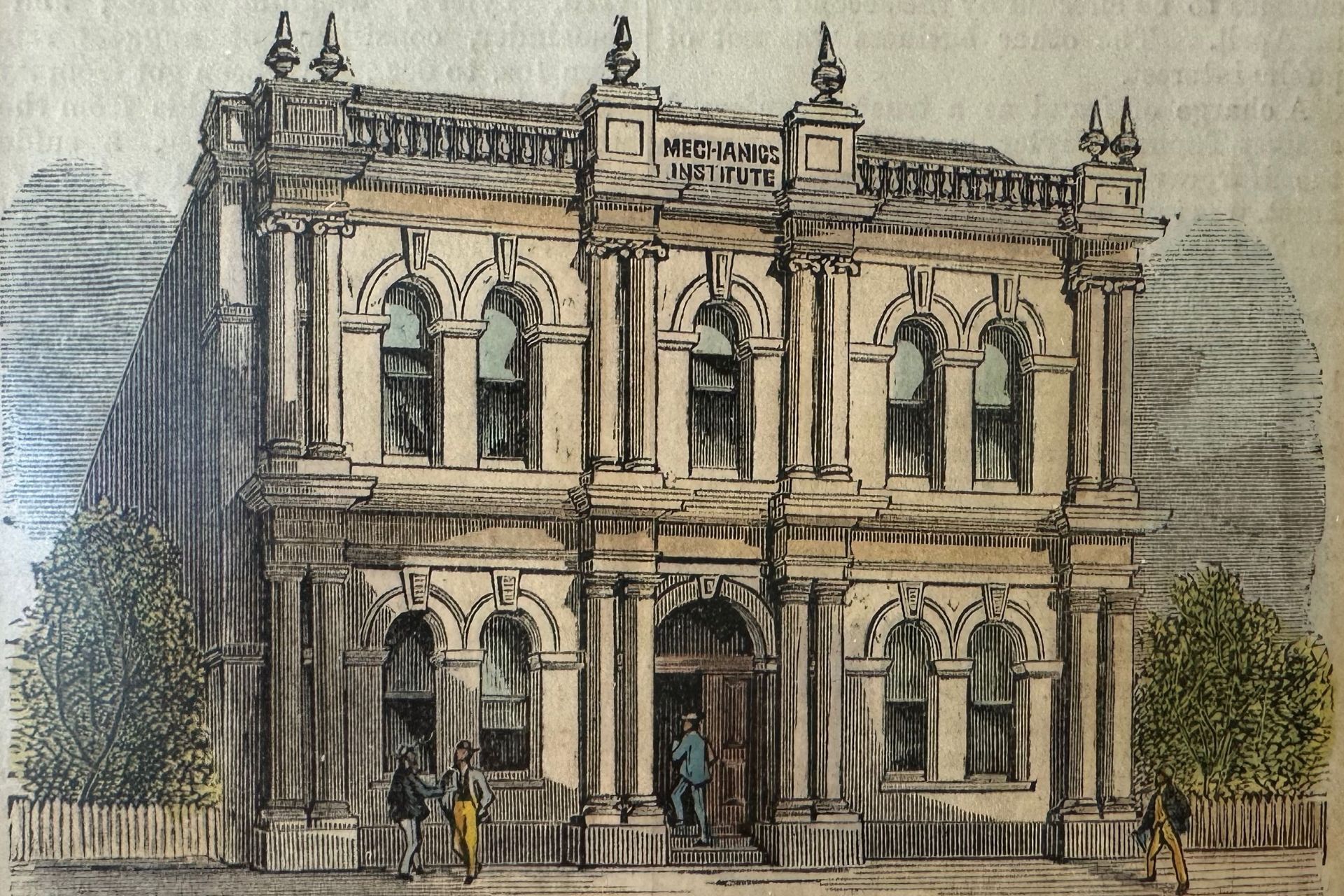
Foundations of Learning: The History and Founders of the Williamstown Mechanics' Institute
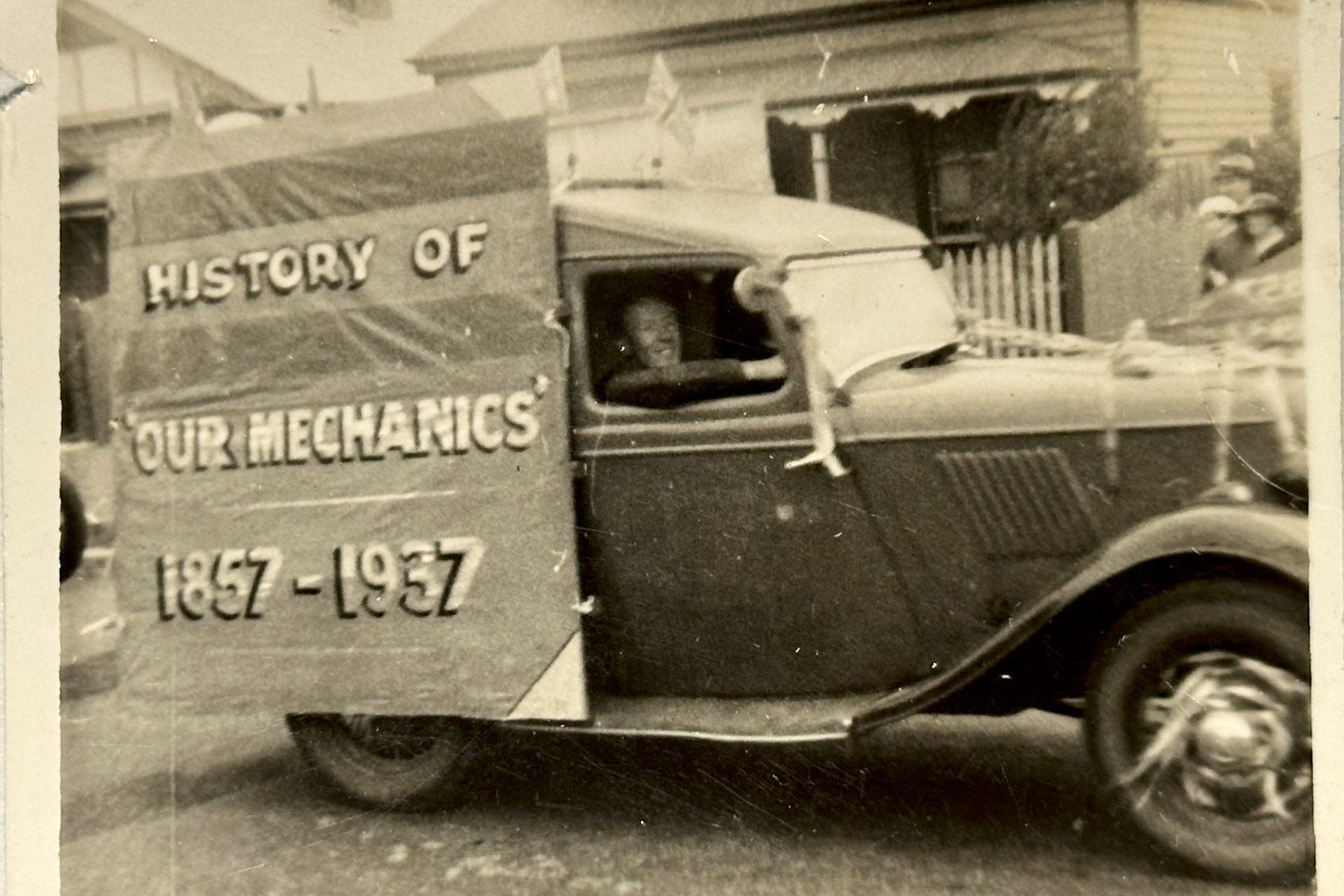
The History of Our Mechanics
Preliminary discussions to establish a Mechanics Institute in Williamstown commenced in 1854, with twenty gentlemen elected to the committee. However, due to a lack of vision and direction, this first attempt was unsuccessful. Substantial progress did not occur until September 1856 when the newly elected inaugural council voted to proceed with its establishment.

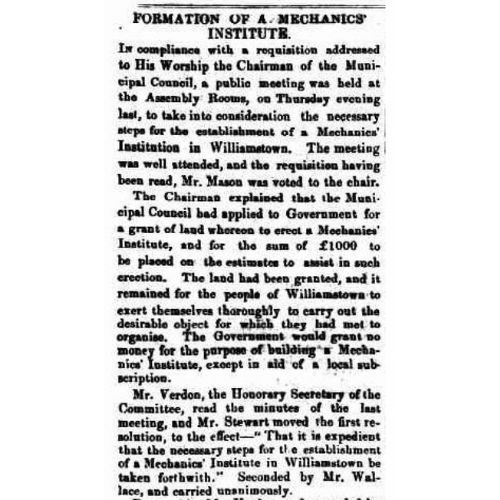
The Williamstown Municipal Council, under the leadership of Chairman Thomas Mason, submitted a request to the Hon. Surveyor-General of New South Wales for a grant of Crown land at the corner of Parker Street and Melbourne Road to construct the Mechanics Institute.
The land for the Electra Street precinct was granted by the Hon. Surveyor General, Government of New South Wales in 1856, with the land being “permanently reserved for Mechanics’ Institute purposes” . While the land was duly allocated for the precinct, the Governement did not offer any financial assistance for the building, leaving the community to fund its construction, primarily through donations and subscriptions of its members, including an initial £150 donated by the founding members.
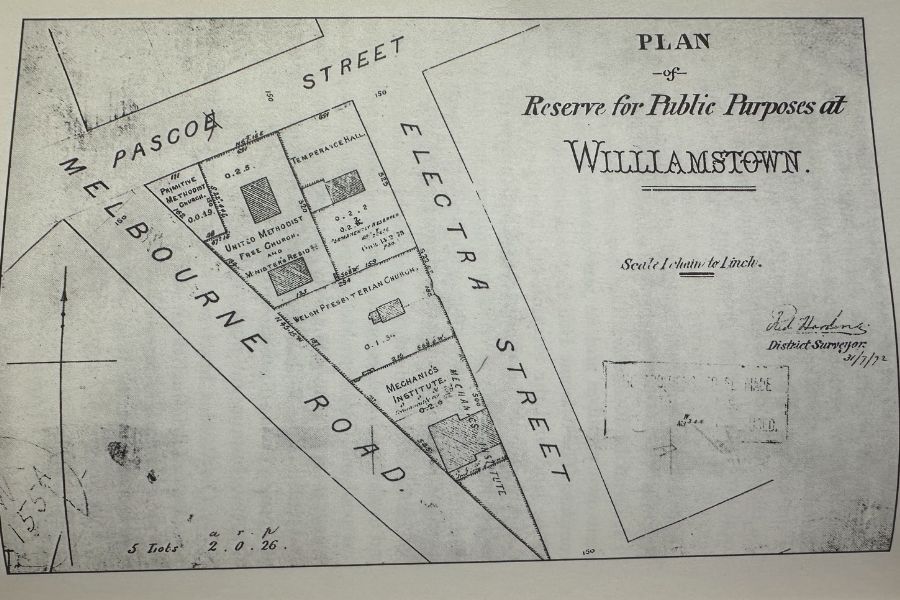
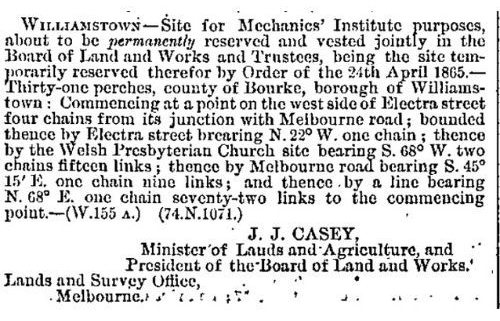
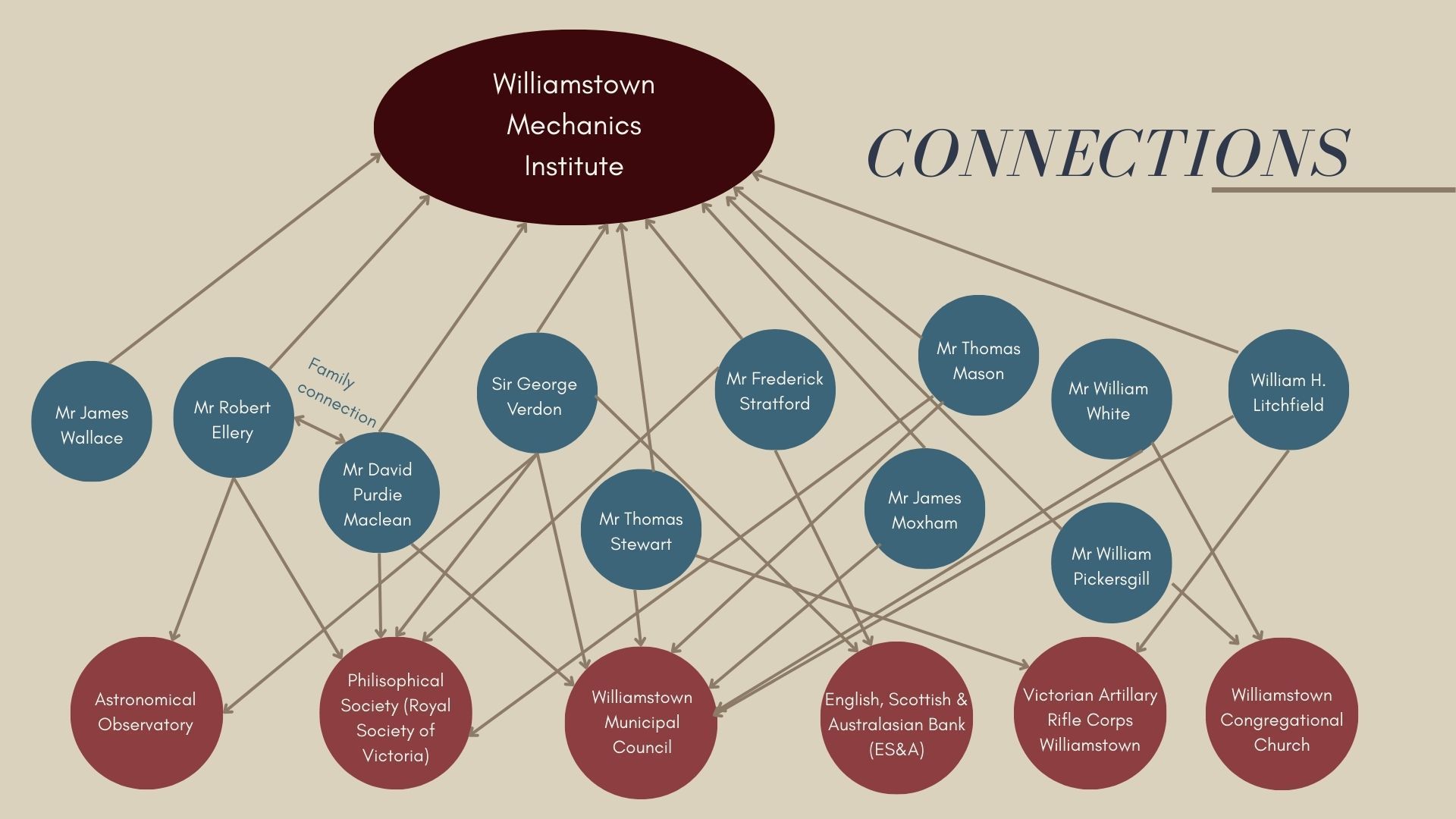
The founding members of the Mechanics Institute were appointed during a public meeting on October 16, 1856, and represented various community organisations. This group included some members of the inaugural Williamstown Municipal Council, with others who would later play significant roles in shaping the early development of the colony. Their connections spanned interests in the Municipal Council, the Philosophical Society (Royal Society of Victoria), the Astronomical Observatory, the English, Scottish and Australian (ES&A) Bank, the Congregational Church and the Victorian Artillery Rifle Corps (Williamstown). The diagram below shows their community connections that have been discovered to date.
The inaugural committee of eleven was formed, comprising Mr. Thomas Stewart, Mr. Thomas Mason, Mr. George Verdon, Mr. William Pickersgill, Mr. William Henry Litchfield, Mr. Robert Ellery, Mr. William White, Mr. James Wallace, Mr. James Moxham, Mr. David Purdie Maclean, and Mr. Frederick Stratford. While some of these names may be familiar as they grace the streets that local residents navigate daily, others might require an introduction.
Mr George Verdon (Sir)
Secretary
Probert, Verdon & Co, Merchants & Sailmakers, Member of inaugural Council, Treasurer of Victoria and member of Legislative Assembly. First Agent-General for Victoria to England. Knighted for services to the colony. Pioneer statesman.
Mr Frederick Stratford
Treasurer
Manager of English, Scotish and Australian Chartered Bank (ES&A). First Treasurer of Institute
Mr Robert Ellery
Librarian
First Government Astronomer, Williamstown Observatory & Melbourne Observatory. Mapped the Southern Stars
Completed Geodetic Survey of Victoria.
Dr David Purdie Maclean
Coroner, Surgeon, Member of Inaugural Municipal Council, Performed first autopsy at Old Morgue, father to Dr Hector Maclean.
Mr Thomas Mason
Chairman of Inaugural Municipal Council, J.P, first Post Master, auctioneer, magistrate, member of legislative assembly, Mayor - First President of Institute.
Mr Thomas Stewart (J.P.)
Magistrate, J.P., Member of Inaugural Municipal
Council, Commander Victorian Volunteer Artillery Regiment, Williamstown.
Mr William White
Shipwright and founder of Whites Shipyards. Built the ferry, Port Fairy Lifeboats, Gellibrand Lightship. Founding member of the Congregational Church in Stevedore Street.
Mr William Pickersgill
Carpenter of bathing ship, undertaker. Founder, Secretary and Sunday School Teacher of Congregational Church in Stevedore Street.
Mr James Moxham
Member of inaugural Municipal Council, Commissions Agent for land sales, publican of Moxhams Napier Hotel, Stevedore Street, Juror on Inspector Price inquest.
Mr James Wallace
Teacher and Headmaster, of first school - St Mary’s Roman Catholic School, writer, author and poet. First Vice-President of Institute.
Mr William Henry Litchford
Master Mariner. Council Auditor. Member of the Cricket Club and Victorian Artillery Regiment.
Secretary of the Pilots Board. Fled with £4,000 in debentures from the Pilots Board and was convicted of embezzlement.
The newly formed Atheneum as it was originally called, found a home, offered for rent by James Moxham at £120 per annum at the buildings known as The Assembly Rooms in Little Nelson Place, initially for a period of three months, with the option of a further two years. The pre-fabricated iron structure was originally shipped from England and first used to store corn and hay. One could only imagine the 'melting pot' it would have been in the hot Australian summers. The Atheneum was located in Little Nelson Street (Aitken Street) between Parker and Pasco Streets, very close to Jackson Street. The Nelson Heights apartments car park is now located on the site.
"Tenders were called within a month for bookshelves, two tables & ten benches, a screen and ten candlesticks. 5 chandeliers (candle type) were purchased for £20.
The fairer sex, while not represented on the committee of the Mechanics Institute, as was the social norm of the time, contributed greatly to fundraising for the institute, organising the first grand Soiree, held on Tuesday 16th December, 1856. It was reported in the Williamstown Chronicle on Saturday 20th December, 1856 that "Upwards of 400 persons sat down to a sumptuous repast, prepared by the following ladies, who presided at their respective tables: Miss Sutton, Mrs Moxham, Miss Goodsir, Mrs Bowie, Mrs Lebue, Mrs Henderson, Miss Poole, Miss Baxter, Mrs McKee, Mrs Huint, Mrs Maclean, Mrs Lawson, Mrs Douglas, Mrs Davis, Mrs Mason, Mrs Henderson, Miss E. Sutton, Miss Pasco, Mrs Hannah, Mrs Carder, Mrs Rich, Mrs Usher, Mrs Piper, Mrs Hammond, Mrs Langford, Mrs Howe. The hall was tastefully decorated, and brilliantly lighted, and every facility was afforded by the worthy proprietor for the accommodation of the large number of ladies and gentlemen assembled on that occasion". Thomas Mason as chair, addressed the audience, as did Rev William Henderson, Mr G.F. Smith and Dr Macadam.
"The speakers were relieved during the evening by the musical performances of several gentlemen amateurs, who sang a variety of airs, glees; &c;, in a highly creditable manner. The proceeds of the soirée, arising from the sale of tickets, amounted to £64 13s."
The inaugural committee presented a provisional report on the first months of operations to the inhabitants of Williamstown, as reported in the Williamstown Chronicle on 21 February, 1857. The sum of £270 had been raised for the building fund, and "contributions of books; maps, and periodicals have been solicited". Librarian, Mr Robert Ellery reported "that upwards of 130 volumes of books, among which were some valuable works, had been presented to the Institution by several gentlemen". 101 subscriptions has been received and the annual subscription was set at £1/10
The inaugural lecture was delivered by Dr Macadam on 11th March 1857 on ‘Botany’. Dr Macadam was likely known to Ellery and Maclean as members of the Philosophical Society (Royal Society of Victoria). He was later to become the Hon.Secretary for the ill fated Burke and Wills Expedition.
Fun fact: The native Australian “Macadamia” nut was named by Ferdinand von Mueller, the Director of the Royal Botanic Gardens, Melbourne. - after his good friend and colleague Dr John Macadam in 1857.
Click here to read more about the Williamstown Mechanics Institute
References:
- Trade Circular, 10 February, 1855
- Formation of the Williamstown Mechanics Institute, Williamstown Chronicle, Sat 18 October 1856, pg 3
- History of Williamstown, Elsum
- Williamstown Historical Society - Betty Jamieson research, 2013
- Williamstown Historical Society - "Tenders" Research Report by Ada Ackerley, 1988
- The Mechanics Institute Soiree, Williamstown Chronicle, 20 December 1856, pg2
- The Wiliamstown Atheneum, Williamstown Chronicle, 21 February 1857, pg 3
Our stories