Michael Egan - From Treasury to Torrens, Tracing a Colonial Legacy
Nicole Harris • April 16, 2026

Architect: Michael Egan (c.1846 - 1912)

Early Life and Family

Michael Egan was born around 1846 in Athlone, Westmeath, Ireland. He migrated to Melbourne as a child with his family, sometime between 1854 and 1868. He was the third son of Bridget Corcoran and Michael Egan Sr., who notably served as both Councillor and Mayor of Richmond.


Architectural Career and Public Works

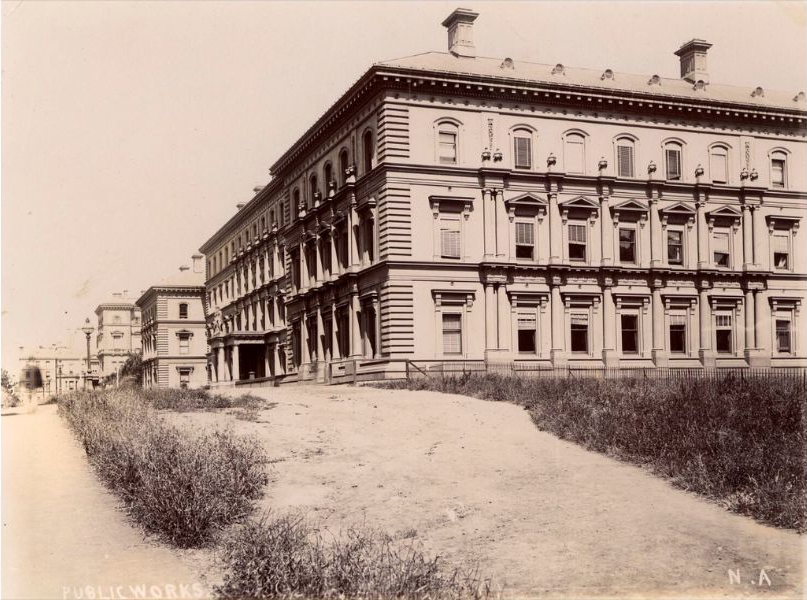
Michael Egan established himself as a Victorian-era architect based in Melbourne during the mid nineteenth century, with the gold rush, population growth and rising wealth, spurred public works, major buildings and ambitious infrastructure. It was in this atmosphere that Michael Egan made his mark as an architect, especially through public commissions and competitions. He is recognised for significant contributions to public works during the 1860s and 1870s. Egan is best known for winning the competition to design the Government Offices at No. 2 Treasury Place. His professional portfolio includes a range of projects for the Public Works Department, such as bridges, wharves, and other government buildings.


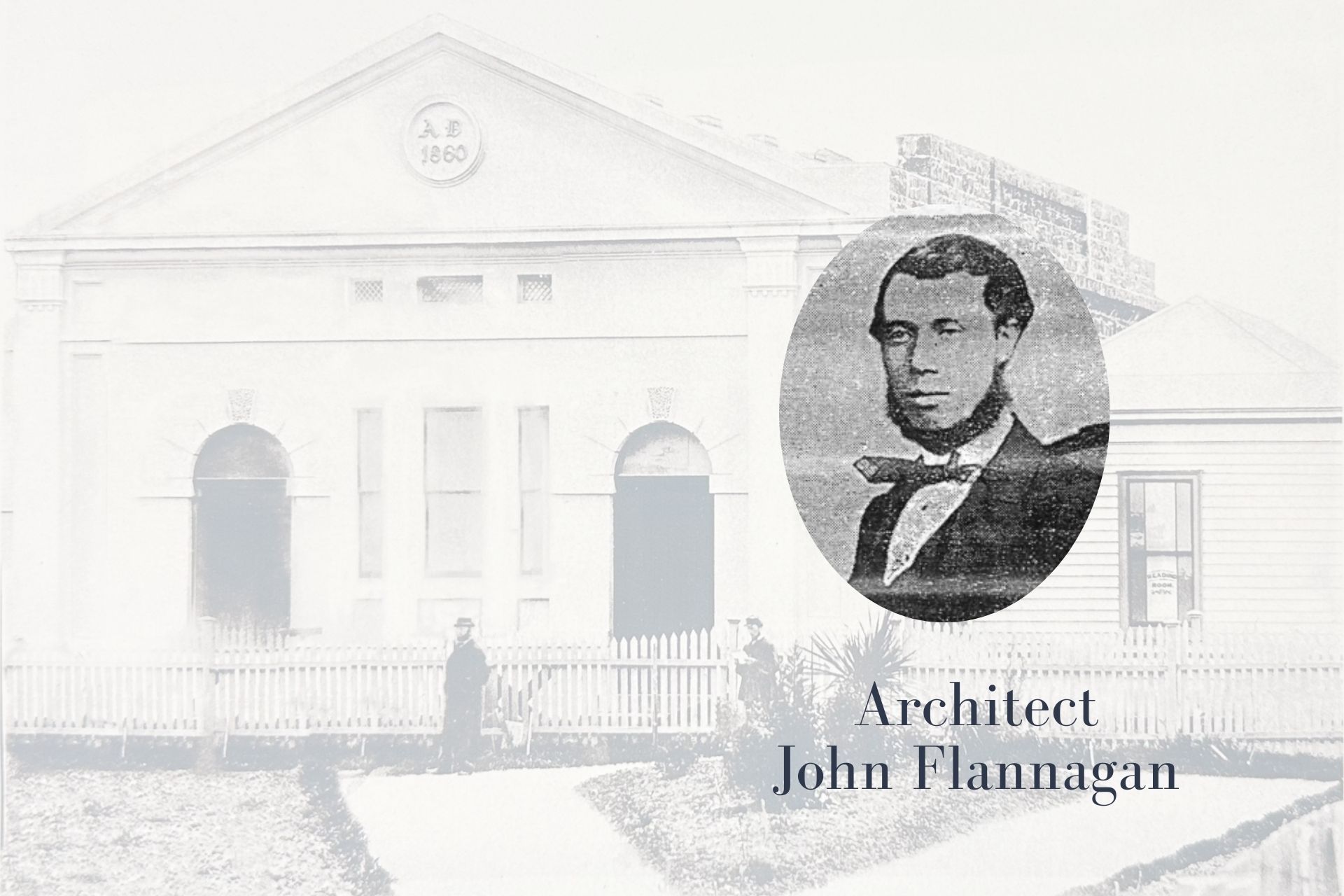
In his early years, Egan is believed to have worked for John Flannagan, the first architect of the Mechanics Institute, Williamstown. County Court records detail a dispute between Egan and Flannagan, where Egan sued for unpaid wages and reimbursement of a premium paid to learn the profession of surveyor and architect. Egan claimed Flannagan refused to instruct him, while Flannagan accused Egan of being 'systematically brusque' to customers. The court awarded Egan £38. (The Age, quoting McIvor Times, 25 September 1863).

Notable works

Egan’s design for the new Government Offices at No. 2 Treasury Place, Melbourne, is frequently referenced in local historical accounts. His winning entry, selected in 1859, was initially considered ‘a bit plain’ and was subsequently modified to include columns and a decorative portico. Although the foundation was laid in 1859, construction was delayed until 1875–76.

In March 1869, Egan was recorded in Richmond Council Minutes as being awarded second place by esteemed architect William Wardell for his designs for the Richmond Town Hall. During this period, Egan’s father, Michael Snr. was serving as Councillor and Mayor of Richmond.


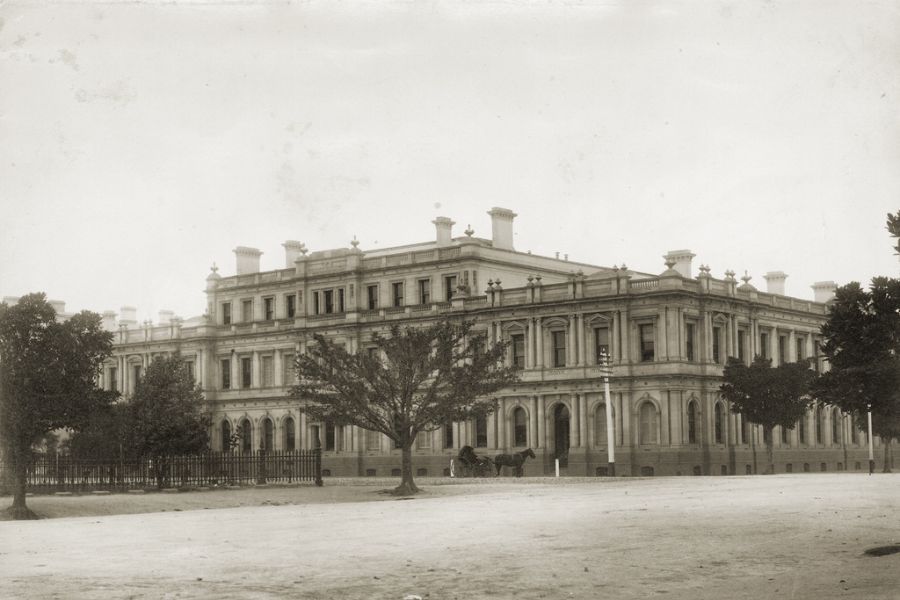
Among his major accomplishments is the design of the Torrens Building at 202-220 Victoria Square, Adelaide. Designed in 1877 and completed by April 1881, the Torrens Building is described as “the best remaining example in Adelaide of Italian Renaissance or Neo-Classical style with a Palladian composition.” It remains one of South Australia’s most notable surviving government buildings. During this period, Egan also submitted a design for the University of Adelaide’s first building (later known as the Mitchell Building), winning second prize in the competition. Although initially appointed as architect and tasked with producing working drawings, Egan’s design was ultimately considered too expensive, and the committee engaged William McMinn to amend it. The completed building is often attributed to McMinn, though many sources note its strong resemblance to Egan’s original design.


Egan maintained offices first at 76 Collins Street and later at Oriental House, 28 William Street, Melbourne, as reported in The Argus.
Commercial and Residential Buildings

In Williamstown, Egan designed four two-storey shops adjoining the Pier Hotel in 1872 for Mr S. H. Sandford. He was also engaged to design four two-storey bluestone shops at 131–137 Nelson Place, constructed between 1873 and 1875 for Mrs Crane and Mr Peter Power. 


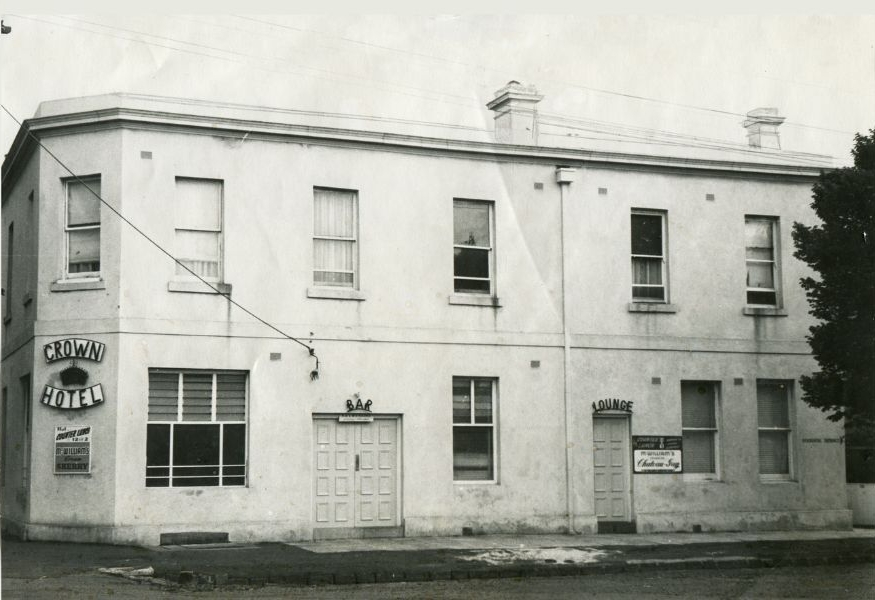
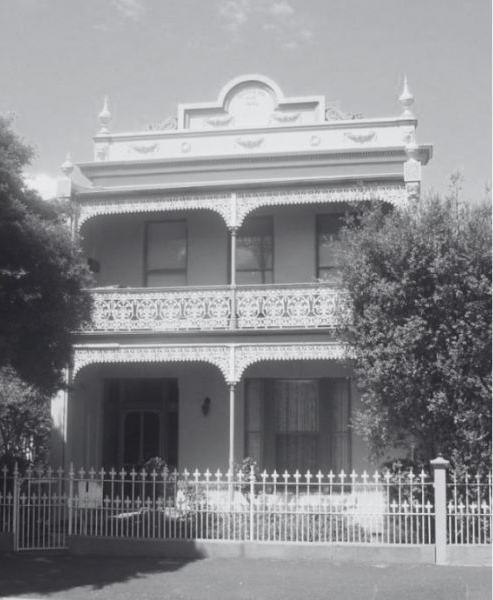
In 1874, Egan was commissioned by William Pearson, a Williamstown Councillor and later Mayor, to design the Crown Hotel on the corner of Pasco and Cecil Street. Pearson, who was also the licensee, required a residence next to the hotel, and Egan designed a two-storey Victorian Italianate terrace house at 160 Cecil Street in 1875, both are still standing today. Additionally, Egan was tasked with sourcing suitable stonemasons for the foundation stone of the Wilkinson Memorial Fountain in Nelson Place, and he advertised for builders for a boat shed for the Williamstown Rowing Club in 1876.


Egan designed additional two-storey Nelson Parade residences for Messrs Peter Murray and James Anderson, as well as the Williamstown Gas Co. Retort House in 1877. In January 1881, he called for tenders to construct a two-storey shop and dwelling for Mr John Morgan in Nelson Place.


He was also commissioned to prepare plans for a two-storey house in Brighton for Mr Thomas Bent MLA in 1877. Thomas Bent would later become Victorian Premier and Treasurer (1904–1909). Egan is further listed as architect for various residential buildings in Brighton, Toorak, South Yarra, Richmond, St Kilda, and Williamstown through to 1881.


Williamstown Mechanics Institute - Stage 3, 1880

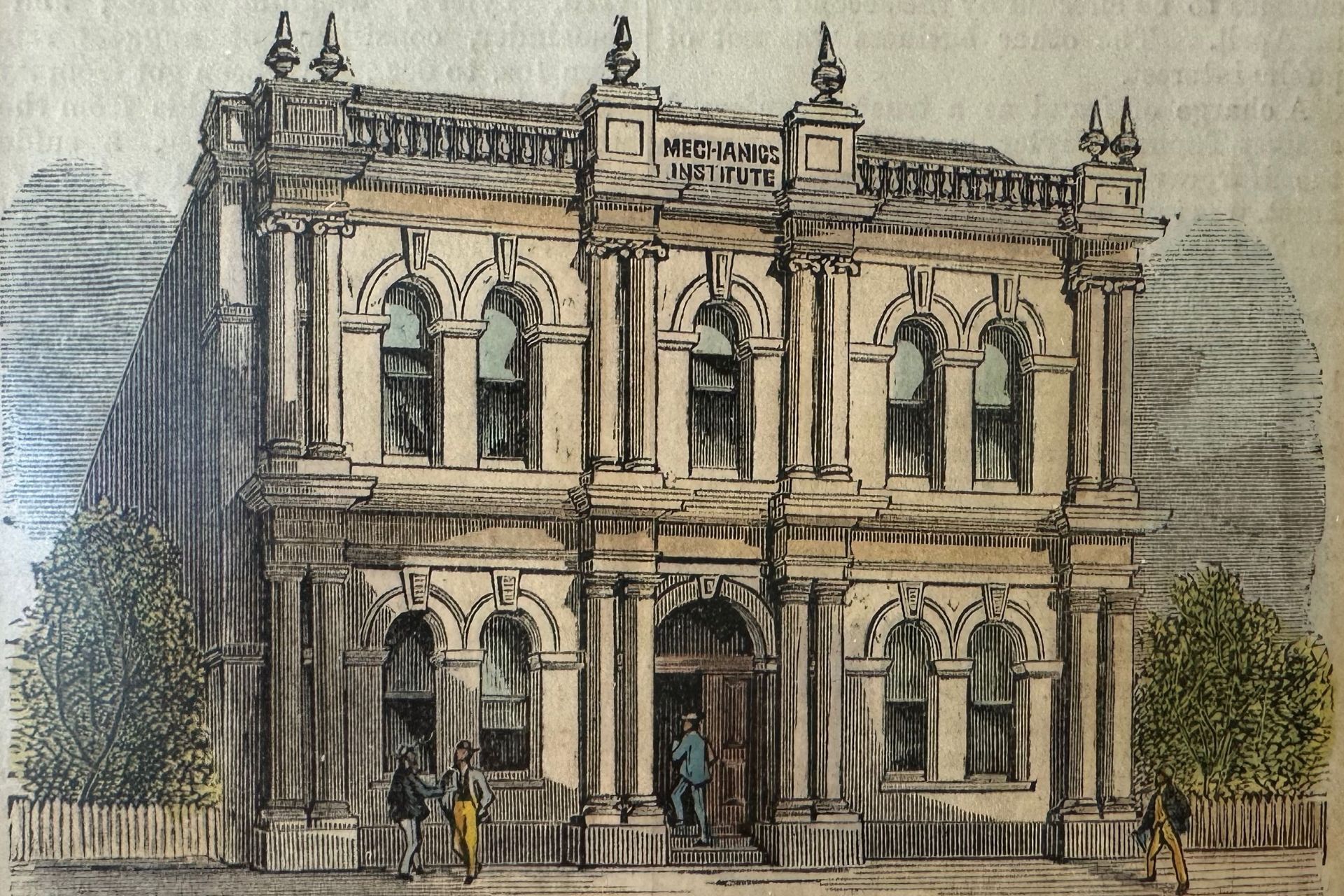
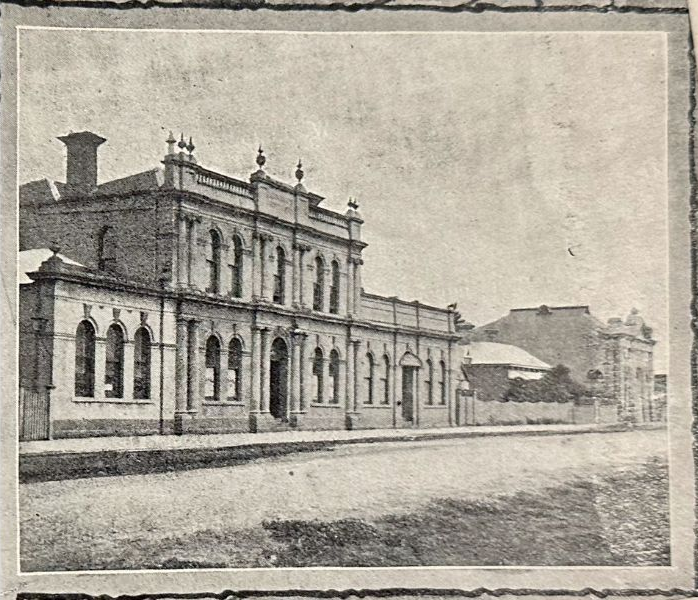
The committee of the Mechanics Institute, engaged the services of Michael Egan for alterations and remedial work to the hall, as well as additions in the form of the Southern wing of the building. In March 1880, Egan called for tenders, with Mr V Riadden later listed as the builder. This commission likely arose as William Pearson was on the committee of the Mechanics Institute at this time, and Egan had previously completed architectural designs and buildings for Pearson in 1874–75.
Later recognition and legacy

In 1881, Michael Egan won an award at the International Exhibition for his architectural drawings. He also submitted a design for Flinders Street Station. Although unsuccessful, his plans were purchased for £50 due to their notable merit (The Argus, 20 April 1883, p. 6). Many of Egans works are now heritage listed with No.2 Treasury Place, Melbourne and the Torrens Building in Adelaide recognised an exceptional nineteenth century buildings.


Michael Egan passed away on 23 October 1912 at the age of 66.


If you would like to read more about the Williamstown Mechanics Institute, please click here


References:

  • Australian Architects Index. The Age quoted McIvor Times, 25 September 1863
  • The Argus, 11 Sep 1875, page 11
  • Australian Architectural Index File. Record 41454. The Argus 1 May 1872, page 3
  • Australian Architectural Index File. The Argus, 4 Aug 1871, page 3
  • Australian Architectural Index File. Record 45774. The Argus, 25 Sep 1876, page 3
  • Australian Architectural Index file. Record18578. The Argus, 21 Jan 1874, page 3.
  • Williamstown Advertiser (Vic.:1875-1954), Saturady 15 January, 1881. Page 2
  • Australian Architectural Index file. Record 32607. The Argus, 1 Oct, 1875. Page 2
  • Australian Architectural Index File. Record 13401. Registration 566. The Argus, 21 May 1877, page 3
  • Williamstown Advertiser (Vic.:1875-1954), Saturady 15 January, 1881. Page 2
  • Australian Architectural Index file. Record 22003. The Argus, 6 Jan 1877, page 11
  • E Melbourne. The City past & present https://www.emelbourne.net.au/biogs/EM00083b.htm
  • Australian Architectural Index File. Record 12467, Registration 2347.The Argus, 10 Mar 1880, page 2
  • Australian Architectural Index file. M. Egan, Melbourne, wins award at the International Exhibition for architectural drawings. Argus20.5.1881 (Int. Ex.supplement, p 62)
  • Australian Architectural Index. Record 35524. The Argus, 20 Apr 1883, page 6.
  • Williamstown Historical Society archives
  • Hobsons Bay Council Heritage Study
  • Victorian Heritage database - https://vhd.heritagecouncil.vic.gov.au/search?kw=No.+2+Treasury+place&aut_off=1


Our stories
By Freya Smart April 16, 2026
On July 10, 1860, the Williamstown Mechanics Institute was opened with an extensive soiree. With the institute’s opening, it was also decided to create a public library associated with the institute, in the hope that the institute could take advantage of the government grant for free libraries. [1] Later that year, in October, it was announced that 200 volumes had been added to the library in the last six months, bringing the total number of volumes to 940. Furthermore, upwards of 1000 books had been issued to users in the library’s first half-year of being opened. [2] Reports from later that decade continued to outline the extensive additions to the library, including “the writing of our most celebrated Philosophers, Statemen, and Travellers.” The committee sought not to only add to the library works of fiction, but also “those works which have a direct tendency to instruct and elevate the minds of readers.” In April 1867, it was reported that 1,932 books had been issued in the past six months, revealing the steady rise in popularity of the library. [3] By May 1869, £2500 had been spent on the Mechanics Institute building, and the library’s total number of books had reached 2,532. Ability to loan books from the Melbourne Library meant that members could choose from 4,000 books in total. It was also at this time that a “most comfortable and attractive” reading room was opened, which hosted a fireplace and “the most popular newspapers and magazines of the time.” [4] Later that year, in October, an auction was held to get rid of damaged books. The proceeds of the auction were to be for the purchase of new books, thus “maintain[ing] the high standard of excellence which [the] Library has attained,” and providing library members with “works of the great writers of the day”, including those in disciplines such as theology, science, arts, history, biography, travels, poetry, and fiction. With satisfaction, the committee also noted that attendance of the reading room had increased considerably. [5] In April 1870, the committee announced that they had continued to make valuable additions to the library, displaying “great discrimination in choosing only such as will tend the elevate the taste of the readers.” Books added included Henry Fawcett’s Manual of Political Economy, Napoleon’s Julius Caesar, Charles Dickens’ Our Mutual Friend, and Alfred Tennyson’s Holy Grail, among many others. [6] By April 1871, the library’s total number of books had now reached 2,467. The Reading Room continued to be well-attended, including by seamen who frequent the Williamstown piers, who were allowed free admission. [7] In July 1873, a report from the annual meeting of the Victorian Seamen’s Mission announced that 30,000 to 35,000 seamen visited Victoria each year, revealing the importance of the free reading room at Williamstown. [8] According to a report from October 1874, in the past six months the committee had added compilations of Dickens, Thackeray, and Scott. 109 volumes had also been rebound, thus leaving the library in a more satisfactory state regarding both the number of volumes and their condition.[9] In October 1877, it was noted that there had been an increase in attendance of the reading room by officers, apprentices, and seamen. Shipping firms had promised subscriptions to the funding of the institute for their seamen. The President of the institute believed that the free reading room would provide “comfort and improvement of the seamen in their employ, thereby checking the abominable vice of drunkenness that prevails among sailors when they are left to their own resources.”[10] In April 1879, the library increased its opening hours.[11] Later that year, the front room of the library was fitted for public convenience, and the public were allowed free access to the library.[12] In November 1879, the institute changed its name to “The Williamstown Mechanics’ Institute and Free Library,” which had been necessary to enable the library to receive government funding.[13] By April 1886, over 4,250 volumes were now in the library. Various clubs and societies had also begun to use rooms in the library, including the Amalgamated Society of Engineers, the Williamstown Shipwright’s Society, the Williamstown Horticultural Society, the Williamstown Eight Hours Society, and more. The library had also received a donation of twenty images from the Melbourne Public Library, which were to be framed and hung around the institute.[14] In April 1886, an editorial in the Williamstown Chronicle written by representatives of the institute criticised the lack of library subscribers, particularly among the youth, who appeared to be more interested in sports rather than mental cultivation. The writer lamented that they cannot see how a couple of hours spent at our Mechanics’ Institute – or other kindred establishment of a night – would at all lessen a young man’s prowess in the sports arena, and, when the more serious duties of life come to be entered on, the knowledge thus acquired would be of infinitely more service to him…[15] In April 1888, at the institute’s AGM, it was suggested that there should be more attention given to accommodation in the reading room, which would “induce youths to cultivate literary knowledge instead of congregating at corners and walking about the streets.” [16] The library was thus seen as of vital importance in educating Williamstown’ youth. I n October 1891, another letter to the editor of the Chronicle urged the social and individual importance of the library: Can you explain how it is that the bulk of Williamstown people fail to appreciate the local institute and free library to the extent it deserves? Maybe it is that they really do not fully understand the intellectual feasts that are daily offered for their acceptance… The existence of the institution wholly depends upon the support of the public, and surely every intelligent member of our community must feel that such an institution is beneficial and elevating in character, and an advantage to the town.[17] In January 1899, the library had nearly 5000 volumes and was considered “one of the best in the suburbs.”[18] In January 1903, the institute’s committee entered into an agreement with the town council to municipalise some parts of the institute, while keeping the library and reading room under the control of a joint committee of council members and representatives of the institute. The agreement was on the condition that the council erect a new hall for the institute capable of seating 300 people.[19] By May 1909, the library had continued to expand, housing 5456 books on its shelves, with a total of 234 chairs inside the institute.[20] . November 1925 saw renovations for the institute: the flooring of the stage was renewed, the public reading room was furnished with new periodicals, and framed photographs of Australasian scenic spots were hung on the walls.[21] By January 1927, the library was composed of more than 9,000 books, periodicals, and magazines.[22] A report from May 1928 announced that the library now catered for 500 families, which was a higher percentage of the population than any other suburban library. It was also noted that for the past years, the library had not received any government grants but had rather been supported entirely by member subscriptions, and “those desirous to read”.[23] In August that year, a junior section was added to the library.[24] In July 1929, there was a motion that the committee confer with the Williamstown City Council in order to obtain a grant for the purchase of educational literature. With a grant of £350 a year, the committee said they would provide educational literature, a free children’s library, and a free reading room that included papers and magazines. The agreement would be under the control of a joint committee of the council and representatives of the institute.[25] In September that year, the institute sent a letter to the council, stating that they were not prepared to accept the offer to take over the assets and liabilities of the institute upon terms which they felt meant the municipalisation of the institute. The committee renewed its application for a grant, and representatives argued that the institute had done a lot for the educational needs of the municipality, thus meriting council support. Ultimately, the establishment of a children’s library and free library would benefit all.[26] The next month, the Mayor moved that £100 be spent on the institute, and in November the council asked the institute to indicate how they would spend the money. The institute’s committee responded that they would establish a free children’s library with 800 books. Twenty-four women had also volunteered to help get the library going. It was hoped the children’s library would be finished for Christmas.[27]
By Nicole Harris April 16, 2026
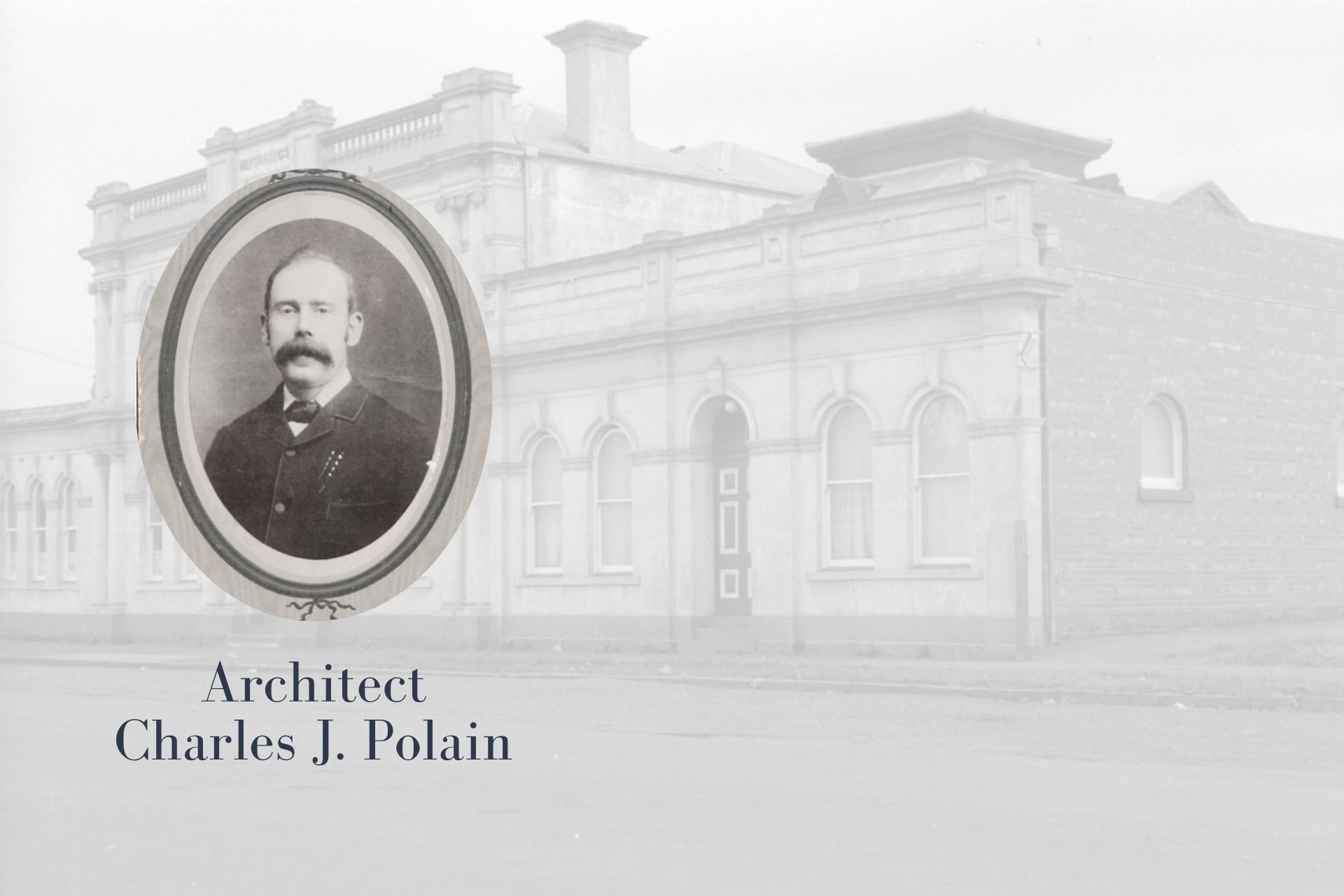
Architect: Charles James Polain (1856-1899)
By Nicole Harris April 16, 2026
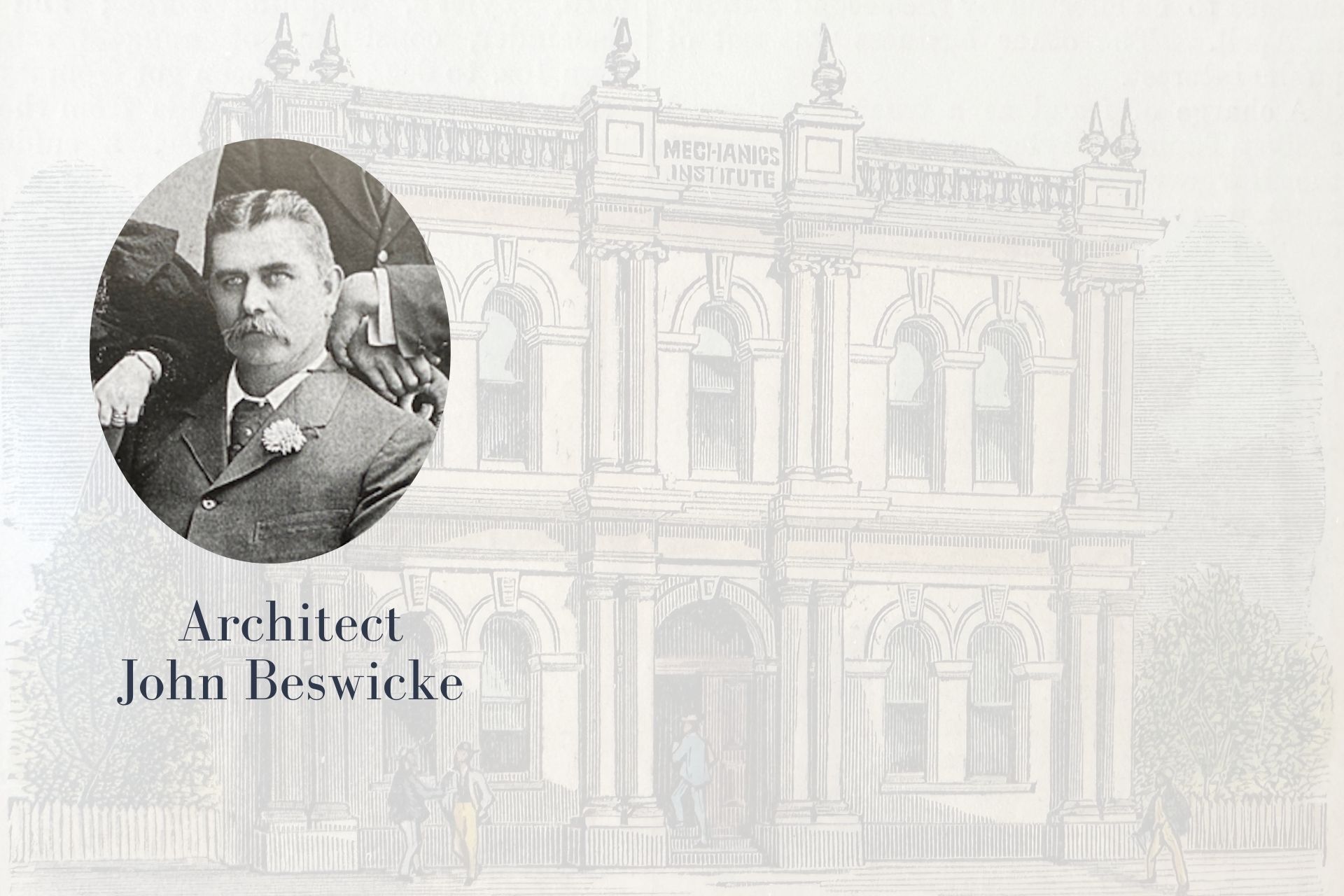
Architect – John Beswicke (1847-1925)
By Nicole Harris April 16, 2026
Architect: John Flannagan (1838-1882)
By Nicole Harris April 16, 2026
1860 - Stage 1: Early beginnings
By Nicole Harris April 16, 2026
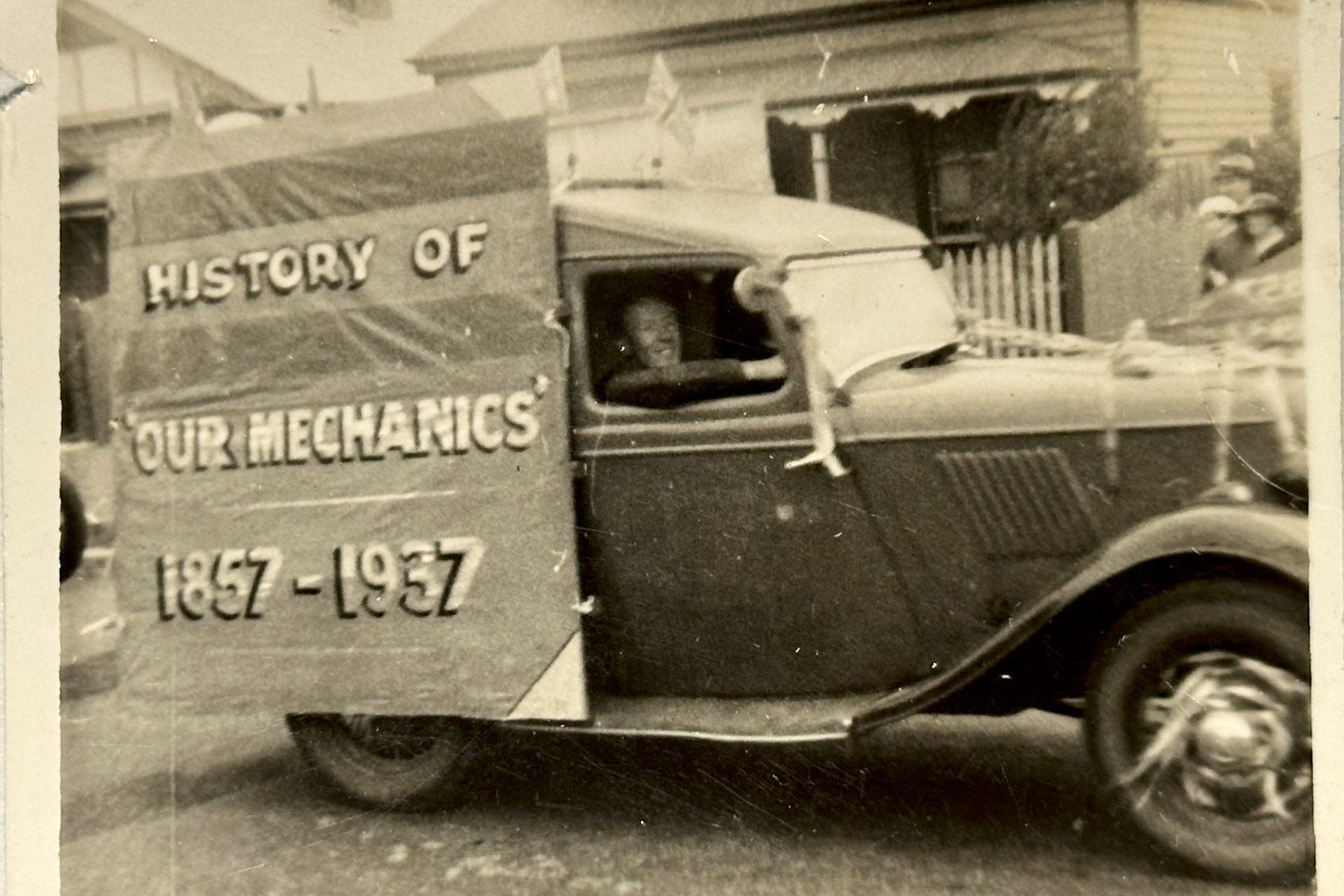
The History of Our Mechanics
By Nicole Harris April 16, 2026
From a belief “that education is not just for the wealthy and should be available to all with curious minds and determination to better themselves”.
By Jennie Moloney May 17, 2025
Charting a New Course: The Life and Legacy of Captain William Hobson
Williamstown Football Club
By Geoff van Wyngaarden May 17, 2025
Williamstown Football Club history from 1860 to present day, including significant events and players in the clubs history.
More Posts