Beyond the Ledgers
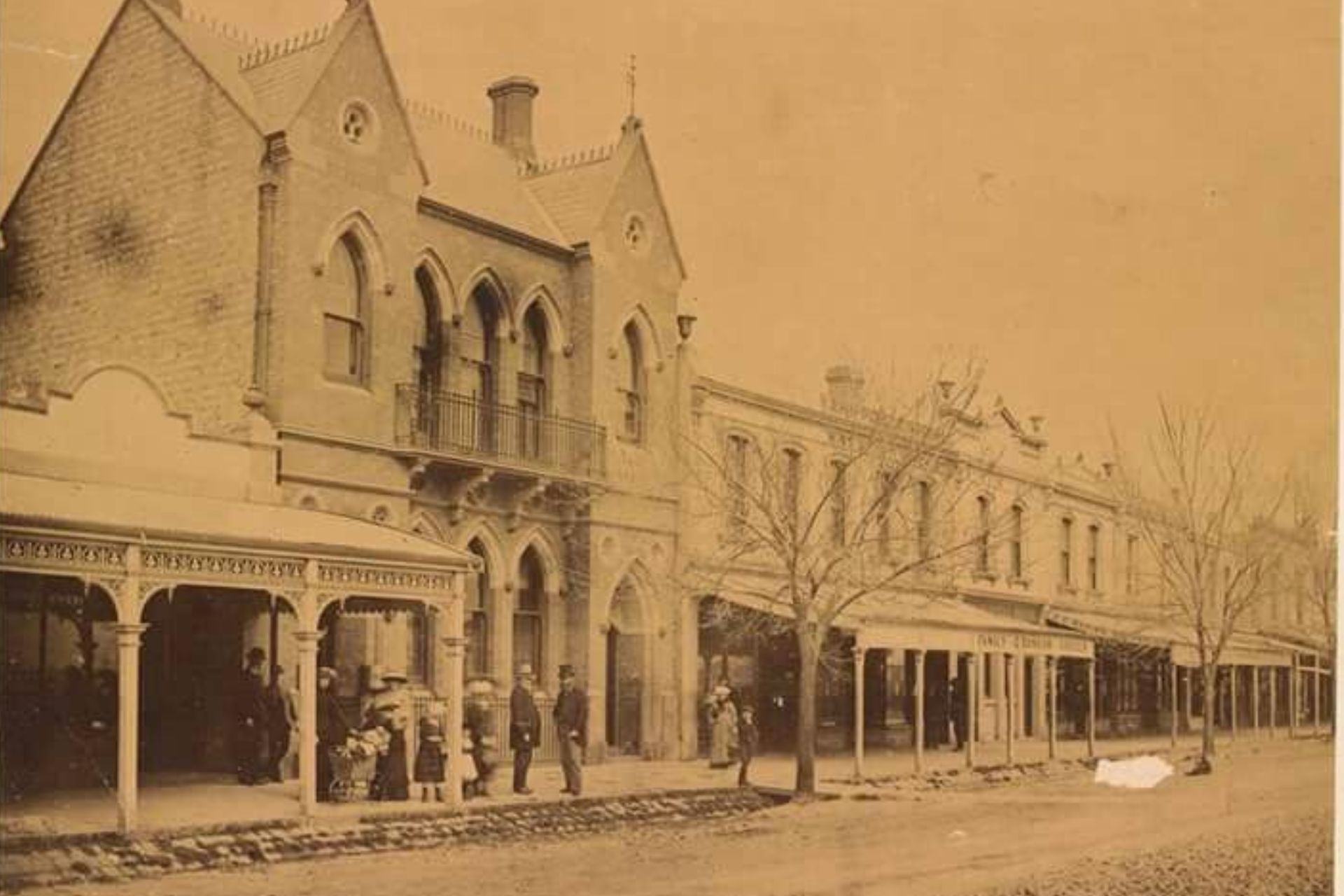
The men who managed the Williamstown E.S.& A. Bank
Bank Managers played a significant role in the community of the early settlement. They held prominent positions, not only with the bank, but were entrusted to Treasurer or leardership positions with the Williamstown Municipal Council and other community led organisations such as the Williamstown Mechanics Institute and the Holy Trinity Church.
Here are their stories.
Frederick Augustus Stratford (1825 - 1875)
Manager: 1854 – February 1861
Stratford is regarded as the first manager of the Williamstown E.S.&A. branch. He arrived from England via Sydney in 1854 and occupied the seven-room stone and iron dwelling attached to the original bank premises in Thompson Street. The 1856 electoral role records indicate as ‘Bank Manager at the E.S.&A. Bank’ he earnt a salary of £100 per annum.
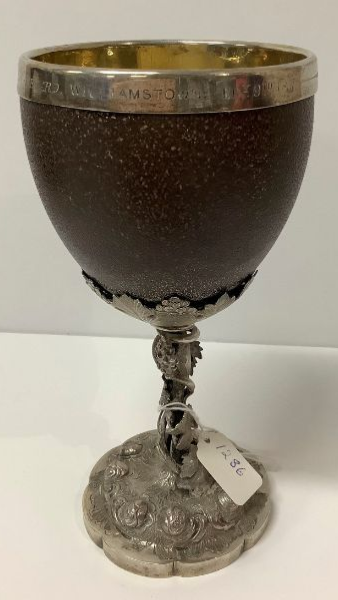
Stratford was also closely involved in Williamstown’s civic life. He was a founder and first Treasurer of the Williamstown Mechanics’ Institute, demonstrating the important role that bank managers often played in community organisations. In 1861, he was promoted to become Manager of the E.S.&A. Bank in Sydney and presented with this decorative Goblet in recognition.
Stratfords’ appointment was likely supported by fellow civic leader George Verdon who he joined on the Williamstown Mechanics Institute inaugural committee. Incidentally Verdon, also a Williamstown local, went on to be the E.S & A Bank Governor in Australia and the Melbourne Head Office for the Bank (ANZ) has the ‘Verdon Chamber’, above the Commercial Operation where Verdon resided for many years.
William Dempster (c.1830 - 1898)
Manager: 1861 - March 1897
William Dempster was one of the most significant figures associated with the E.S. & A. Bank in Williamstown. Appointed manager in 1861 following the promotion of Frederick Augustus Stratford to the banks Sydney offices, Dempster remained in the role until March 1897, overseeing the branch during the construction and early decades of the purpose-built bank building at 139 Nelson Place.
Hailing from Sussex, Dempster arrived in Victoria in 1851 and initially worked for Probert and Verdon, the ship chandlers established by Sir George Verdon and his business partner in Port Melbourne. When the firm’s headquarters moved to Williamstown, Dempster became closely connected with the town’s commercial life. His appointment as manager of the E.S. & A. Bank was said to have been influenced to a large extent by Sir George Verdon.
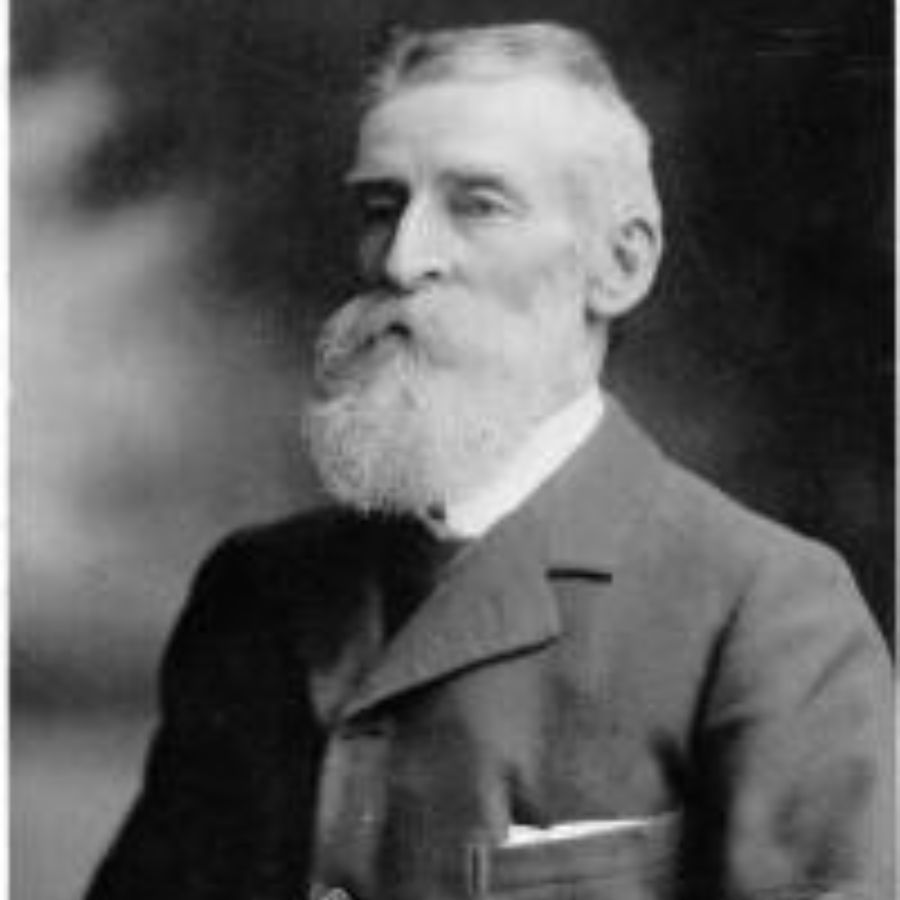
As resident manager, Dempster lived on site and supervised the branch through a period of considerable growth. His long tenure reflected the stability and importance of the E.S. & A. branch during Williamstown’s rise as a major port town. He was also manager when the E.S. & A. Bank entered provisional liquidation during the nationwide banking crisis of the 1890s.
Dempster was deeply involved in Williamstown’s civic and commercial affairs. He was a founder of the Gas Company and served as its Managing Director until shortly before his retirement due to ill health. He was elected President of the Williamstown Mechanics’ Institute in 1888–89 and was associated with a number of other local organisations.
Dempster was deeply involved in Williamstown’s civic and commercial affairs. He was a founder of the Gas Company and served as its Managing Director until shortly before his retirement due to ill health. He was elected President of the Williamstown Mechanics’ Institute in 1888–89 and was associated with a number of other local organisations.
He also served as Treasurer of the Williamstown Council for many years, before being succeeded by Frederick W. Power. His commitment to community institutions extended to the Holy Trinity Church, Williamstown, where he was regarded as a church elder and was noted for supervising the construction of the church, an institution he had supported for many years. It would therefore be no coincidence that the Williamstown Holy Trinity Church was designed by the same architect, Leonard Terry.
In his later years, Dempster resided in Bruce Street, Toorak, in a house named “Stratford” — an intriguing coincidence given the name of his predecessor, Frederick Stratford.
Dempster’s long association with banking, civic administration, industry and church life makes him a central figure in the story of 139 Nelson Place and in the broader history of Williamstown’s nineteenth-century development.
Frederick West Power (1859 - 1923)
Manager: 1897 – 1919
Frederick W. Power was one of the most respected managers associated with the E.S. & A. Bank in Williamstown. The eldest son of notable local resident Peter Power, he was closely connected with the town’s commercial and civic life and remained associated with the bank for an impressive 44 years.
Power had not originally intended to pursue a banking career. A meeting with Sir George Verdon, a family friend and prominent Williamstown figure, changed the course of his professional life. He began at the E.S. & A. Bank as a junior clerk, later serving as a teller for six years, and, as one contemporary account noted, “always advanced as occasion offered.”
After serving for seven years as Clerk in Charge of the Williamstown North Branch, Power was promoted in November 1889 to Manager of the North Williamstown branch in Ferguson Street. The branch occupied the “Punshon” building, and his promotion was celebrated at Brews’ Stag’s Head Hotel, where he was presented with a gold watch in recognition of his advancement and local esteem.
By 1900, Sands and McDougall directories list Power as manager at the 139 Nelson Place branch, indicating that he had relocated from the North Williamstown branch to the main Williamstown premises. He remained manager there until his retirement on 7 June 1919, when Percy Peach succeeded him.
Power was widely regarded as a successful and active figure in Williamstown business life. At his retirement function in the Williamstown Town Hall, prominent guests including Mr C. F. Orr, J.P. of Duke and Orr’s Dry Dock and Mr H. A. Underwood paid tribute to his contribution to the town.
Contemporary speakers described him as an “incomparable bank manager” who had “assisted many residents of this town to affluence.” Mr L. S. Smith of the Bank of Australasia remarked that Power had “set a fine example which would be hard to follow.” Mr T. Henderson also observed that “Mr Power and members of his family had been associated with the early days of the municipality and had taken a prominent part in its public affairs.”
At the conclusion of the retirement ceremony, the Mayor of Williamstown presented Power with a wallet containing £175 10s 6d, a substantial tribute reflecting the high regard in which he was held by the community.
Power’s long association with the E.S. & A. Bank and his standing within Williamstown make him a significant figure in the history of 139 Nelson Place and in the broader story of the town’s commercial development.
Percy Peach (1872 - 1962)
Manager: 1919 – 1924
Percy Peach succeeded Frederick W. Power as manager of the E.S. & A. Bank at 139 Nelson Place in 1919. His appointment was warmly received in Williamstown, where he quickly became known for his involvement in both banking and community life. Mr Peach had been a well respected Bank Manager of the Hawthorn E.S. & A. Branch.
At Mr Power’s retirement gathering in 1919, Mr A. S. Heriot remarked that he believed Mr Power’s successor was “a Peach that was always in season” — a light-hearted tribute that reflected the good humour surrounding Peach’s arrival.
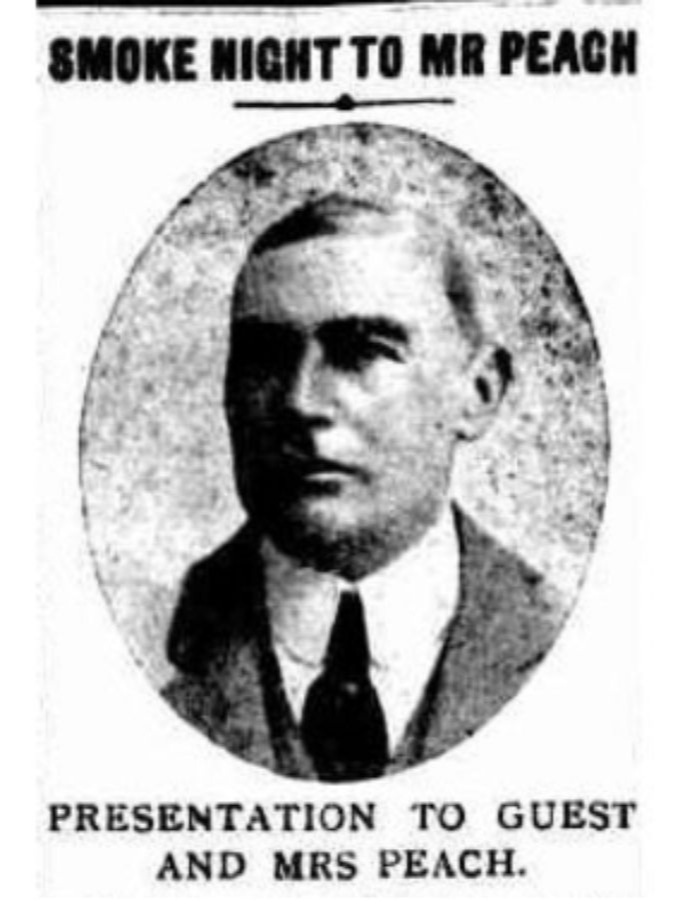
A 1921 Williamstown Chronicle report lists Mr Peach as manager of the Williamstown E.S. & A. branch during a meeting at the Williamstown Town Hall. By 1924, after five years as manager, he was invited to take up the management of the Bendigo branch of the bank.
To mark his promotion, Mr Peach hosted a smoke night in the Mechanics’ Institute lecture room. Approximately 80 guests, including the local Mayor, representatives from E.S. & A. head office, and managers from other suburban branches, attended the event. The evening was catered by Mr F. Loudon of the Thistle Café in Nelson Place and featured entertainment by Messrs Harris and Wren, described as “two incomparable patter comedians”, along with vocal performances by Mr Champion, Mr Collier and Mr Eric Fox.
Peach’s transfer to Bendigo was linked to the bank’s interest in the gold mining industry, and his appointment was supported unanimously by the E.S. & A. Bank Board. The esteem in which he was held in Williamstown was evident in the farewell tributes paid to him and his wife. Mr Peach was presented with an inscribed silver tantalus, while Mrs Peach received a manicure set and mirror.
Although his tenure in Williamstown lasted only four years, Peach was remembered as an active and popular community figure. He enjoyed sport and organised a cricket match between a team of bankers and the Williamstown Council, which ended in a draw, with both sides claiming victory.
A contemporary report summed up local sentiment by stating that “the citizens regarded Mr Peach as a dinkum sport and were satisfied that their loss would be Bendigo’s gain.”
Before coming to Williamstown, Peach had worked at the E.S. & A. branch in Hawthorn until 31 May 1919. He was succeeded at Williamstown by Charles T. Ogilvie in 1924.
Charles Theodore Pottinger Ogilvie (1872 - 1967)
Manager: 1924 – 1930
Charles Theodore Pottinger Ogilvie (1871–1967) brought extensive banking experience to his role as manager of the E.S. & A. Bank at 139 Nelson Place, Williamstown, where he served from 1924 to 1930.
Born in Glasgow, Scotland, Ogilvie built a long and respected banking career across several Australian financial institutions. He began his banking career in Brisbane in 1890 with the Queensland Deposit Bank, before later serving with the Commercial Bank of Australasia and the Commercial Bank of Australia.
By 1903, Ogilvie was recorded as an Accountant for the Commercial Bank of Australasia, and by 1905 electoral rolls listed him as a Bank Manager. He held management positions in Nambour, Queensland, where Queensland Government Gazette records identified him as manager, and later with the London Bank of Australia in Brisbane.
Ogilvie’s broad banking experience included service in both Queensland and South Australia. Following the amalgamation of the London Bank of Australia with the E.S. & A. Bank, he became manager of one of the E.S. & A. branches, eventually being appointed to the Williamstown branch.
He transferred to Williamstown from the Yea branch and was listed in the 1925 Victorian Directory as Bank Manager, 139 Nelson Place. During his tenure, Ogilvie continued the tradition of experienced resident managers who played an important role in the financial life of Williamstown.
Ogilvie retired as manager in 1930, concluding a distinguished banking career that had spanned approximately four decades. His career reflected the mobility and professionalism of senior bank managers in the early twentieth century, as they were appointed to branches across Australia in response to the evolving needs of major banking institutions.
Arthur Harold Davidson (1877 - 1954)
Manager: 1930 – 1937
Arthur Harold Davidson was the final manager associated with the E.S. & A. Bank branch at 139 Nelson Place, Williamstown. His tenure from 1930 to 1937 marked the closing chapter of the building’s long history as a banking institution.
Davidson had been connected with the Williamstown E.S. & A. branch for seventeen years, serving first in clerical roles before becoming branch manager. Electoral roll records show that by 1931 he was residing at 139 Nelson Place, occupying the manager’s residence attached to the bank premises, until the closure of the bank.
As manager, Davidson guided the branch through the difficult economic conditions of the 1930s depression. He was widely regarded as a courteous, obliging and helpful banker who maintained strong relationships within the Williamstown community.
When the Nelson Place branch closed in 1937, Davidson was honoured at a public gathering in the Williamstown Town Hall. According to the Williamstown Advertiser of 18 December 1937, he was praised by civic leaders and banking representatives for his long and dedicated service. Mr Garnsworthy, chairman of the bank, stated that Davidson had “lived up to the best traditions of banking, always been courteous, always obliging and always helpful.”
Councillor Dennis remarked that the E.S. & A. Bank was making a mistake in closing the Nelson Place branch and suggested that the building should be retained in case it became necessary to reopen it in the future. He further commented, “I cannot recall any banker in Williamstown who has filled the position as manager better or more capably than Mr Davidson.”
At the conclusion of the gathering, Davidson was presented with a wallet of notes in appreciation of his service. He retired from banking upon the closure of the branch, concluding a lengthy and respected association with the E.S. & A. Bank at 139 Nelson Place.
Explore more Hidden Stories
Interested in more Stories about the people who have been connected to No. 139 Nelson Place?




Our stories